
The Dark Moon: What It Is and How to Use It
The dark moon isn't the same thing as the new moon — it's the last quiet pause before the cycle resets. Here's what it actually is, what it's good for, and a few honest ways to work with it.
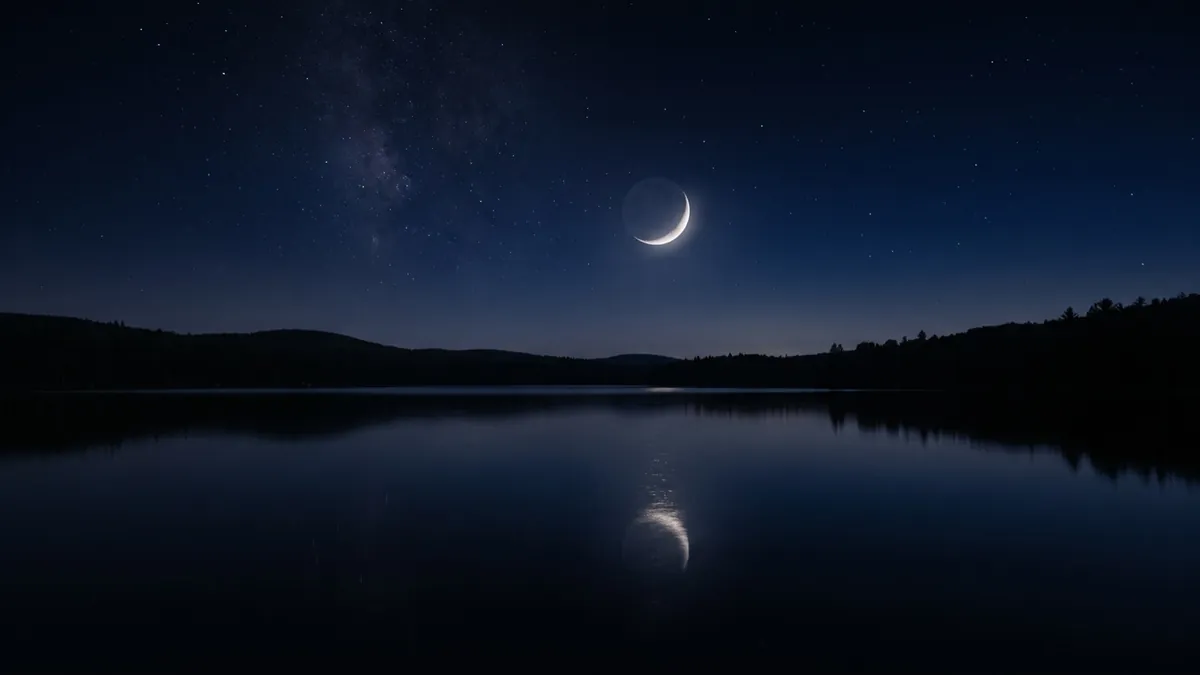
Most of the time, people use "dark moon" and "new moon" interchangeably. Astronomers do this too — the new moon is technically the moment of conjunction, when the moon sits between Earth and the sun and reflects no light toward us at all. The sky is dark. The moon is invisible. Same thing, right?
Not quite — at least, not in practice.
The difference between the dark moon and the new moon
In a lot of magical traditions, the two phases are treated as distinct. The dark moon is the final day or two before the astronomical new moon — the tail end of the waning cycle, when the last sliver has disappeared and the sky is fully dark. The new moon, by contrast, is the moment the cycle flips and the first faint crescent starts to return.
It's a small distinction, but it matters for practice. The dark moon is an ending. The new moon is a beginning. They sit back to back, but they face opposite directions.
Think of it this way: the dark moon is the exhale before the inhale. The pause at the bottom of the breath. Nothing is growing yet. Nothing needs to be growing yet.
What the dark moon is actually good for
Because the dark moon is the end of a cycle rather than the start of one, it lends itself to a different kind of work than the new moon does. This isn't the time for setting intentions, starting projects, or manifesting anything. It's the time for the quieter, less glamorous stuff that makes those things possible later.
Rest. The simplest and most underrated dark-moon practice is just — not doing anything. Sleeping more. Canceling what you can cancel. Turning off the phone. The waning moon has been about releasing and clearing out — the dark moon is the moment you actually sit in the cleared space and let yourself be still.
Shadow work. The dark moon has a long association with looking at what you'd rather not look at — the fears, the resentments, the patterns you keep running. This doesn't have to be dramatic. A journal and an honest question ("what am I avoiding?") is shadow work. Sitting with discomfort instead of reaching for a distraction is shadow work. You don't need a ritual for it, though a ritual can help hold the container.
Divination. Tarot, scrying, pendulum work — practitioners who track these things often report that divination feels sharper during the dark moon. Whether that's because the phase genuinely thins some kind of veil or because you're simply more introspective and receptive when the sky is dark and your schedule is cleared is an open question. Either way, it's a good night to pull cards.
Banishing and final release. If the waning moon is the long process of letting something go, the dark moon is the final severance. Cord-cutting, banishing work, and binding all traditionally belong here — the last push before the slate wipes clean at the new moon.
Honoring endings. Not everything that ends needs to be banished. Some things just finish. A season, a chapter, a relationship that ran its course. The dark moon is a good time to sit with a completed thing and let it be completed, without rushing into what comes next.
A simple dark-moon practice
You don't need much. Here's a bare-bones version you can do tonight.
What you need: a black candle (or any dark-colored candle — a tea light works), a quiet room, and optionally a journal or a tarot deck.
What you do:
- Dim the lights. The point of the dark moon is darkness. Work with it instead of against it. One candle is plenty.
- Sit for a few minutes. No agenda. Just breathe and let the day settle. If your mind races, let it race — you're not meditating, you're arriving.
- Ask one question. Something honest: What am I carrying that isn't mine? What's finished? What am I pretending I don't know? You can write your answer or just sit with it.
- If you have a tarot deck, pull one card. Don't look up the meaning — just sit with the image and see what it brings up. The dark moon favors intuition over reference books.
- Let the candle burn for a while. When you're ready, blow it out. That's the ritual. The exhale.
If you want to do more formal banishing or cord-cutting work, the Cleansing & Release spells on this site are a good starting point.
A note on deities
The dark moon has traditional associations with what some paths call the Crone aspect of the triple goddess, and with specific deities tied to darkness, liminality, and the underworld — Hecate, the Morrigan, Kali, Persephone, Lilith. If you work with any of these figures, the dark moon is considered an especially fitting time for that work.
If you don't work with deities at all, that's fine too. The dark moon doesn't require devotional practice. A candle and a quiet room and an honest question are enough.
When is the dark moon?
The next astronomical new moon falls on October 10, 2026, at 10:50 AM CDT (15:50 UTC). The dark moon is the night or two immediately before that — meaning tonight, the sky is at its darkest, with no visible lunar light.
After that, the first thin crescent of the waxing moon appears, and the cycle starts over. If you want to understand how the whole cycle fits together, Why the Moon Phases Matter to Practice walks through each phase and what it's traditionally used for. And the Moon Phases page always shows you where we are right now.
Why the Moon Phases Matter to Practice
Not because the moon is secretly controlling your mood — because a repeating, visible cycle is one of the best free tools going for building a consistent practice.
Moon Water & Moon Rituals
A practical guide to the most common lunar practice — what moon water actually is, how to make it safely, and a few rituals to pair with each phase beyond just water.
The Full Moon Names: A Month-by-Month Guide
Wolf Moon, Strawberry Moon, Hunter's Moon — where the traditional monthly moon names actually come from, and how practitioners use each one.