The Magical Record
Date each practice. Record time, place, preparation, exact actions, physical and emotional conditions, results, and later reflections. Separate observation from interpretation.

Ritual · discipline · the magical record
A formal path of symbols, timing, study, consecrated tools, and carefully recorded practice—explored through journals, candlelit study, and the Victorian household.
Enter the path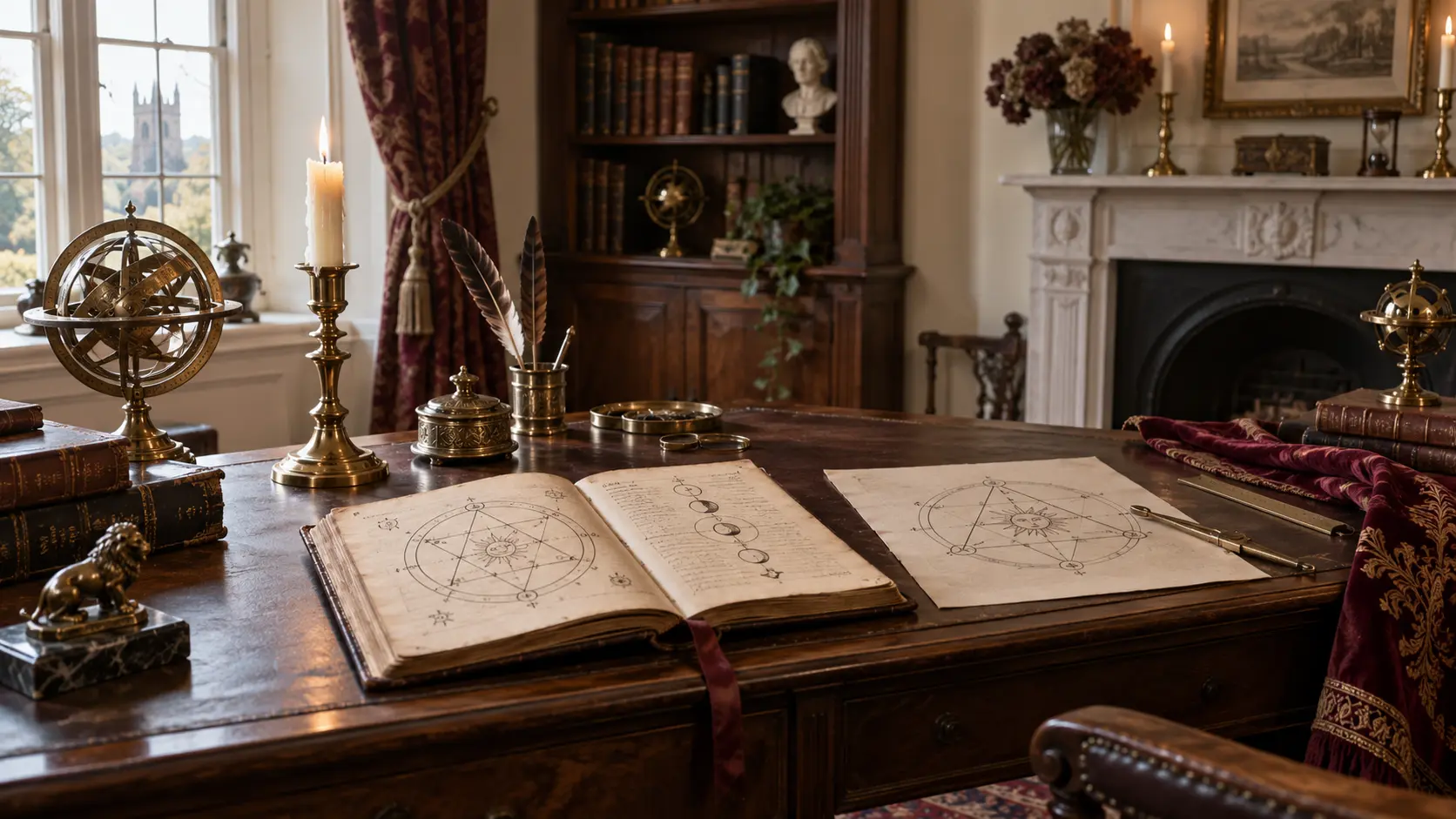
Ceremonial magic is a broad Western esoteric stream, not a single system. This page emphasizes late nineteenth- and early twentieth-century currents, including Golden Dawn-style ritual structure and Aleister Crowley's Thelema. Crowley’s name is spelled Aleister; his work is influential but neither the origin nor the entirety of ceremonial magic.
Before the rite
Formal practice becomes useful when precision serves awareness rather than performance.
Date each practice. Record time, place, preparation, exact actions, physical and emotional conditions, results, and later reflections. Separate observation from interpretation.
Choose a clean, private working area. Mark a circle physically or imaginatively, establish directions, and decide how the rite begins and ends before you start.
Dedicate tools to one clear purpose through cleaning, naming, and repeated use. A tool’s meaning comes from disciplined relationship, not expense.
Colors, planets, metals, perfumes, numbers, and divine names form a symbolic grammar. Use one internally consistent system instead of mixing tables at random.
Train attention before attempting elaborate ritual. Ten quiet minutes, counted breaths, and a written record reveal more than theatrical complexity without concentration.
Define the aim in language that respects consent, proportion, and real-world consequences. Do not use ritual to replace medical, legal, or mental-health care.
The ceremonial sequence
Study the full tradition behind a rite before performing it. These summaries explain purpose and structure without pretending every order uses identical forms.
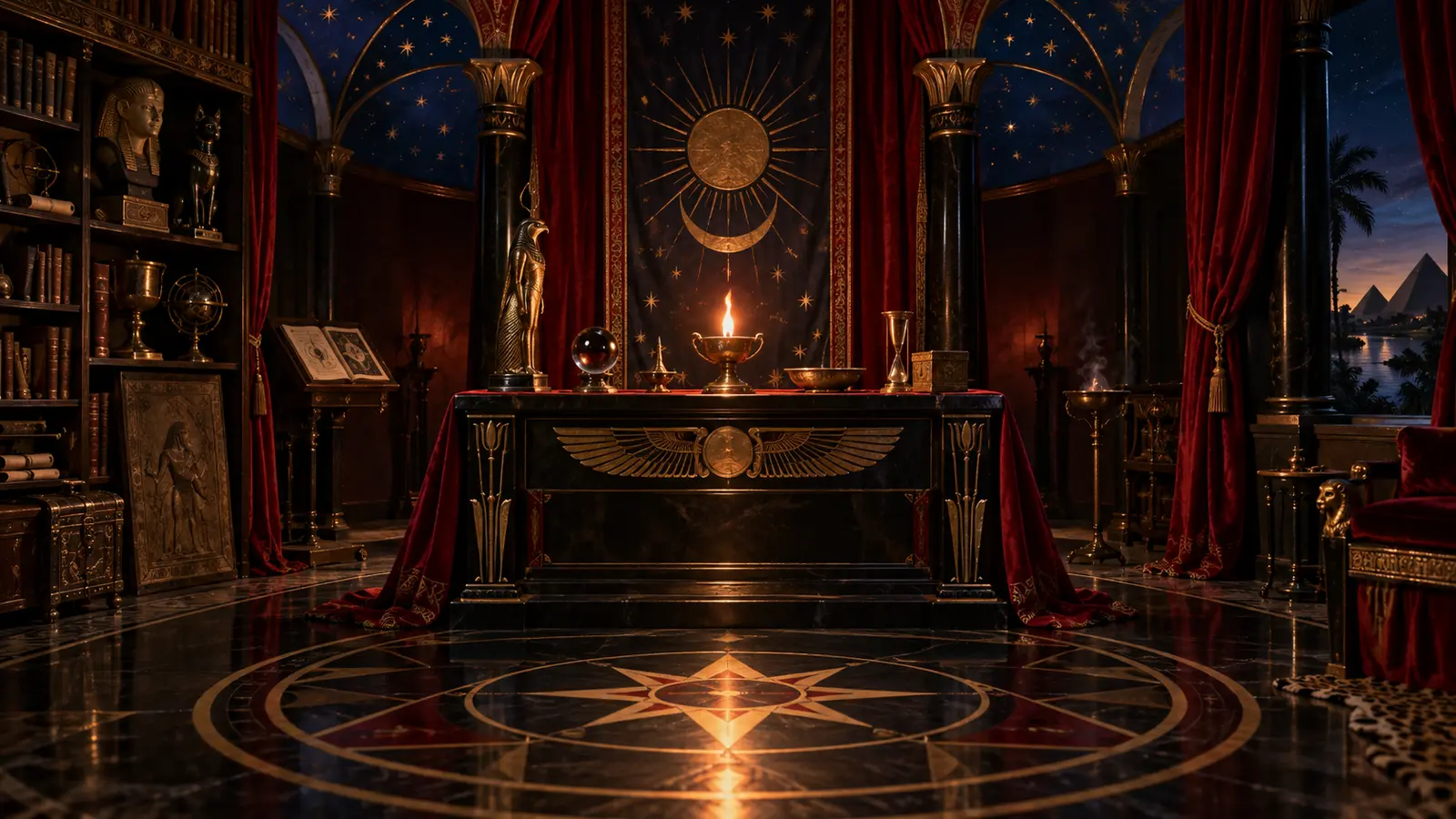
State the purpose, establish sacred space, perform the work, ground, formally close, and record. A deliberate ending prevents the ritual from becoming an indefinite emotional state.
A common Golden Dawn-derived practice combines visualization, sacred names, directional movement, and pentagrams to center the practitioner and define ritual space.
Invoking forms symbolically welcome a chosen elemental quality. Learn banishing, grounding, and the meaning of the form before adding intensity.
A modern Golden Dawn exercise visualizes centers of light along the body with vibration of divine names. Treat it as spiritual visualization, not medical energy treatment.
Select a planet by symbolic aim, then align day, hour, color, incense, hymn, and image. Keep the aim narrow enough to evaluate in the record.
Crowley’s solar adorations divide the day into four stations. Before adopting them, read the source, understand the Thelemic theology, and decide whether that framework is truly yours.
Reduce a concise intention to a personal mark, charge it through focused attention, then close and document the practical action that follows.
Use a planned sequence of symbols as guided visualization. Set a duration, return by the same route, ground afterward, and record imagery before interpreting it.
Invocation traditionally calls a force into identification; evocation calls it into a bounded appearance or symbol. Both require more context and training than a short internet script can provide.
Historical lens
Aleister Crowley (1875–1947) developed Thelema in the early twentieth century and adapted material from yoga, the Hermetic Order of the Golden Dawn, ceremonial magic, Qabalah, and other sources. Study him critically: distinguish history from legend, primary text from later commentary, and personal charisma from useful practice.
In Thelema, True Will is framed as a deep course or purpose—not every passing desire. The concept is theological and philosophical, not a license to ignore consent.
Crowley treated this 1904 text as Thelema’s central scripture. Read it as a primary historical and religious source alongside responsible scholarship.
Nuit, Hadit, and Ra-Hoor-Khuit shape Thelemic imagery, but they are Crowley’s esoteric interpretations, not a substitute for studying ancient Egyptian religion on its own terms.