Threshold Sweep
Sweep from the back of the home toward the door, naming what is leaving. Dispose of debris normally; the direction gives the chore ritual form.

Hearth · threshold · local lore
Old household rhythms, protective customs, seasonal food, charms, and plant knowledge—practical, local, and careful about what belongs to whom.
Enter the path
Folk magic is not one universal tradition. It includes many regional, family, occupational, and religious practices, often woven into ordinary household life. Study the place and people behind a custom. Do not strip closed, initiatory, Indigenous, or marginalized traditions into generic content.
House and boundary
These practices draw on broad household motifs rather than claiming one secret lineage.
Sweep from the back of the home toward the door, naming what is leaving. Dispose of debris normally; the direction gives the chore ritual form.
Place a small iron key or nail securely near the entrance as a symbol of strength and boundary. Keep sharp objects away from children and animals.
Tie three knots while naming protection, courage, and good judgment. Wear or store it where it will prompt those behaviors.
Bake a simple loaf, mark the top, share it, and save no dangerous moldy remnant as a charm. Hospitality is the blessing.
Use a contained dish rather than loose salt, which can harm plants, pets, finishes, and soil. Clean and renew it as a boundary ritual.
While repairing cloth, name what the repair stands for. Visible stitches can honor survival instead of pretending nothing tore.
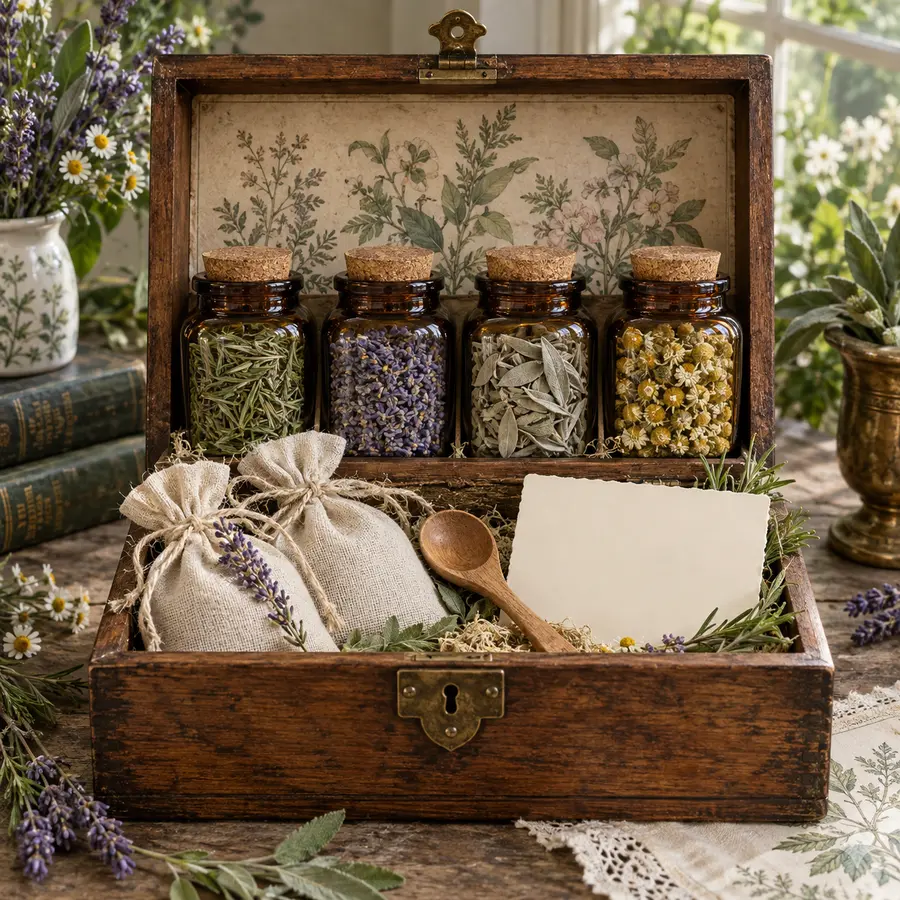
Tie culinary rosemary, bay, thyme, and lavender in cloth. Label it, keep it dry, and replace it before it molds.
Slow down, retrace the last confirmed location, tidy one small area, and speak the request aloud. The practical search is part of the charm.
From the cottage kitchen
Foodways carry memory more reliably than romantic stories about an imagined past.
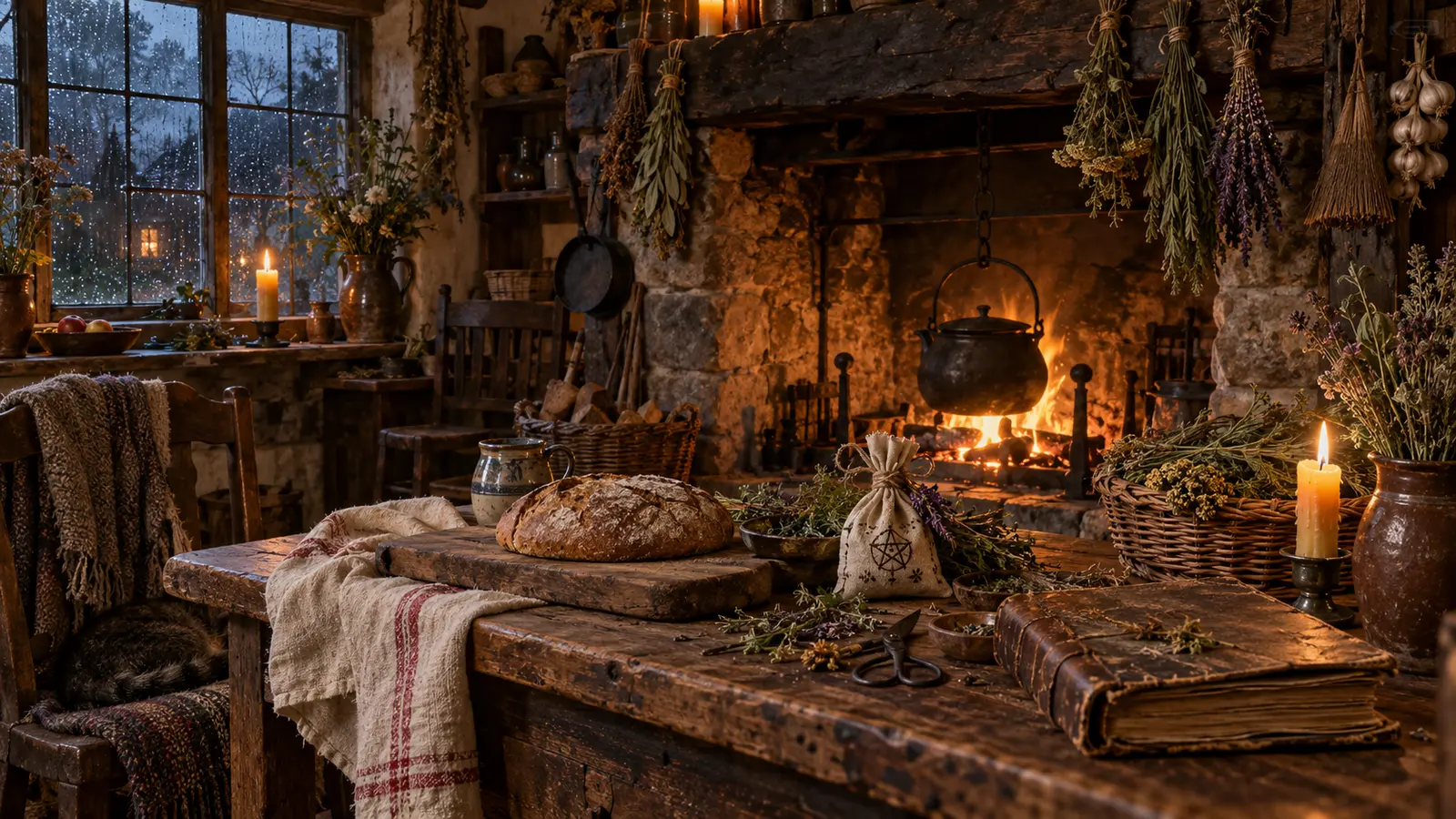
Combine oats, flour, butter, honey, a pinch of salt, and enough milk to bind; shape thin and bake until crisp at the edges.
Cook chopped apples with a little water, honey or sugar, lemon, and one thyme sprig; remove the sprig when soft.
Add chopped rosemary and thyme to a basic yeasted loaf. Let the rising time become a lesson in patience rather than a promise of prosperity.
Macerate berries with sugar, strain, combine the syrup with food-safe vinegar, refrigerate, and dilute before drinking.
Cook onions slowly until deeply golden, add stock and thyme, then serve with toasted bread. The ritual is patient transformation.
Cook pears with sugar, lemon, cinnamon, and clove using a tested canning recipe—or refrigerate and use promptly.
Folk knowledge, modern caution
Historical remedies are culturally important but are not automatically safe or effective. Use this section for comfort traditions and research prompts—not diagnosis or treatment.
A warm shower, humidified room, blanket, and rest may feel comforting. Avoid leaning over boiling water, which can cause serious burns.
A warm honey-lemon drink may soothe the throat. Never give honey to an infant under one year, and seek care for concerning symptoms.
Some adults use warm salt water for temporary throat comfort; do not swallow it, and follow professional advice for children or health conditions.
Choose a clearly identified food-grade tea and check pregnancy, allergy, medication, and medical-condition cautions. “Natural” does not mean interaction-free.
Urgent symptoms, severe pain, breathing difficulty, poisoning, persistent fever, dehydration, or worsening illness require qualified medical help—not a spell or website recipe.
Document recipes, who used them, what they were actually used for, and where they came from. Preserve context alongside the charm.