Plant by the Moon
Plant crops that grow above ground (beans, corn, squash) while the moon is waxing, and root crops (potatoes, onions, carrots) while it's waning. Many gardeners still swear by it.
Porch · almanac · Blue Ridge & holler
Planting by the signs, reading the weather, a candle in the window and bread on the sill. Country magic is the practical, down-home craft of rural America — especially the Ozarks and the Appalachian and Blue Ridge Mountains.
Enter the path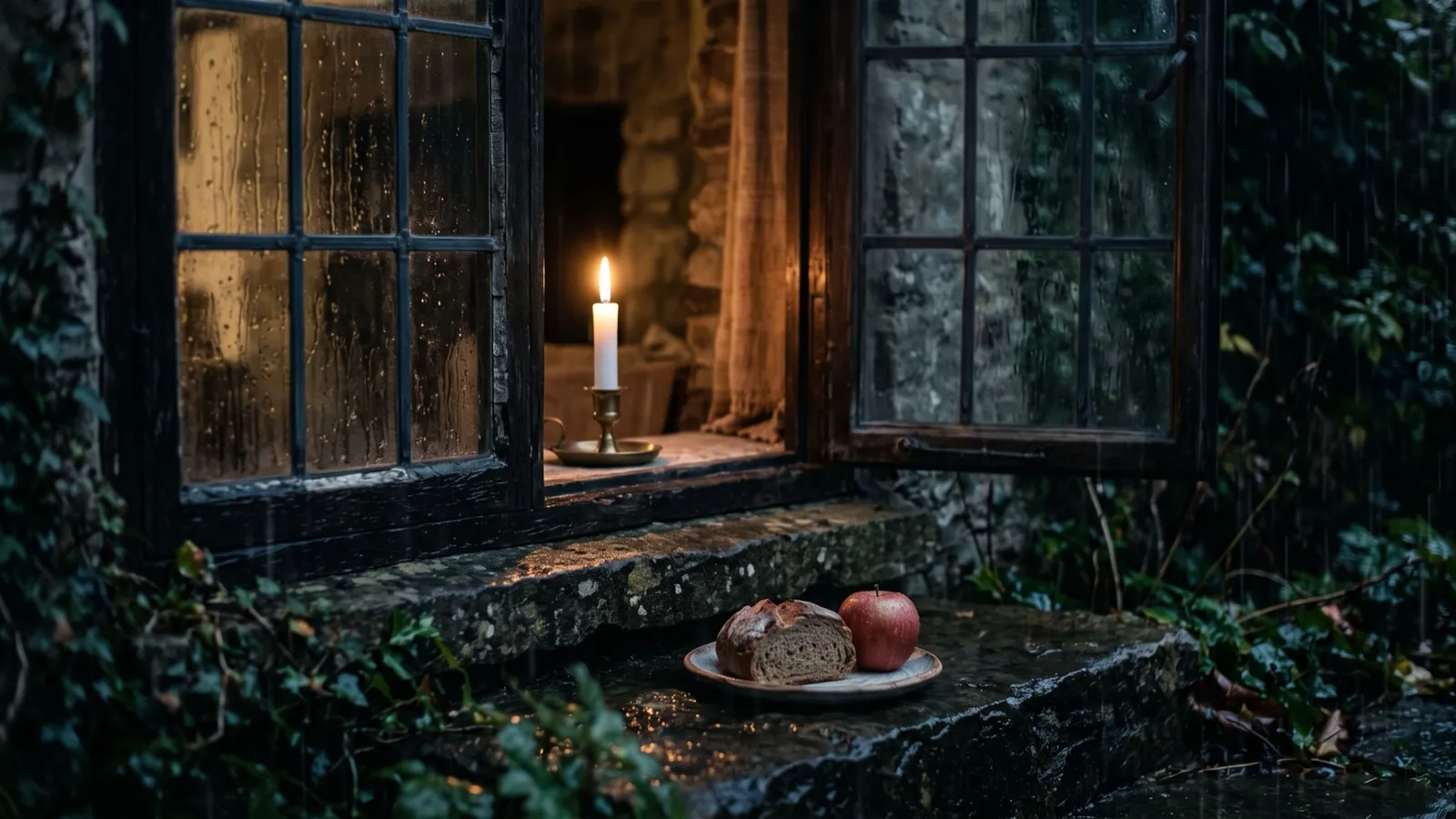
Country magic grew up in farmhouses, gardens and hollers where people lived close to the land and far from doctors. Much of it is Scots-Irish, English, German and Cherokee folk knowledge blended together, often with a strong Christian thread — Bible verses were used as charms, and many 'granny women' and 'yarb doctors' were churchgoers. We share it as history and open household practice. Some Southern customs grew from African American traditions such as hoodoo and rootwork; we name those roots and point you to Black practitioners rather than repackage them.
Field notes
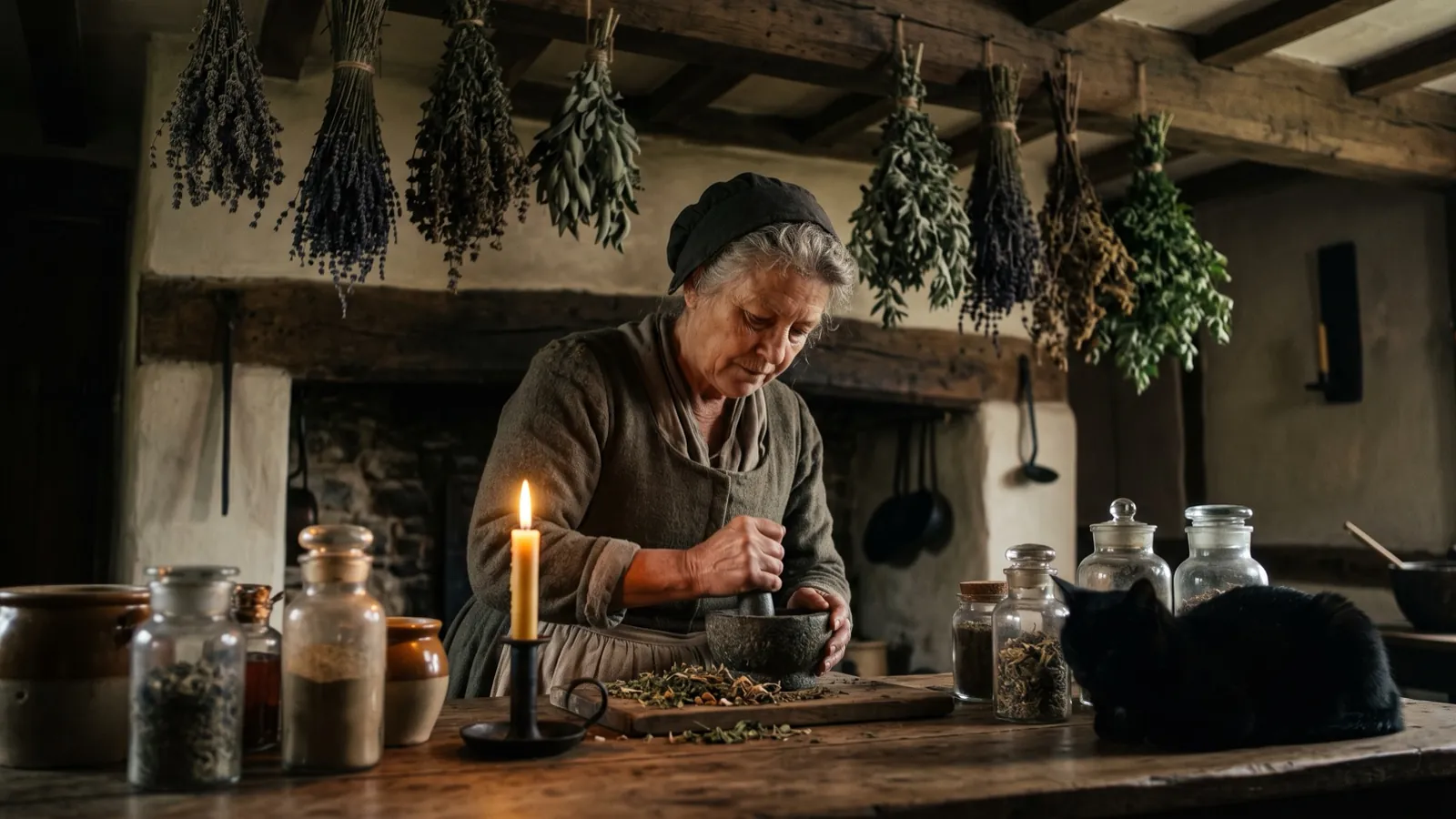
In Ozark and Appalachian communities, the granny woman (or yarb doctor) was the local midwife, herbalist and charmer. She knew which plants eased a cough, when to plant by the signs, and the old words for stopping blood. Folklorists like Vance Randolph recorded their ways in the 1920s–40s; the Foxfire books preserved many more.
The almanac on the nail
For generations, country folk timed their work by the moon and the zodiac signs printed in the farmer's almanac.
Plant crops that grow above ground (beans, corn, squash) while the moon is waxing, and root crops (potatoes, onions, carrots) while it's waning. Many gardeners still swear by it.
The old almanac pictured a man whose body parts matched the twelve zodiac signs. Folks planted when the signs were 'in the arms' or 'in the bowels' and avoided the 'feet' or 'head', depending on the crop.
Set fence posts in the dark of the moon so they won't heave, and lay shingles then too, so they lie flat. This is still passed down in many farm families.
Thick corn husks and woolly worms with wide brown bands mean a hard winter. A ring around the moon means rain within three days. 'Red sky at night, sailor's delight.' Keep your own weather notes and see what holds true.
The old saying goes that frost comes three months after the katydids begin to sing. Mark the date on your calendar and check it.
Buy a farmer's almanac each year and keep notes in its margins — what you planted, when it came up, how the harvest went. In a few years it becomes a family grimoire.
Up in the hollers
The Blue Ridge runs from Pennsylvania through Virginia and the Carolinas into Georgia. Its isolated hollers kept some of the oldest Scots-Irish, English and German lore alive long after it faded elsewhere.

A silver dime worn in the shoe or on a string around the ankle was said to guard against witching and bad luck. If the dime turned dark, someone was working against you. An old silver dime (1964 or earlier) is the traditional choice.
Hang a flour sifter or sieve by the door. Mountain lore says a witch or wandering spirit must stop and count every hole before crossing — and they'll still be counting at sunrise.
Glass witch balls hung in windows came over from England to catch harm in their tangle of glass threads. Bottle trees — blue bottles on bare branches to trap spirits — came to the South through Central African traditions carried by enslaved people. Both still shine in mountain yards.
A bird flying into the house brings news, often a death. An itchy nose means company. Drop a dishrag and someone hungry is coming. A rooster crowing at the door means visitors before nightfall. Keep a list of the signs your own family trusted.
When someone in the family died, married or was born, a person went out to tell the bees and drape the hives in black cloth for a death. If the bees weren't told, folks said they'd leave or die.
For well over a century, people have reported strange glowing lights drifting over Brown Mountain in the North Carolina Blue Ridge. Cherokee and settler stories explain them as spirits searching for the lost. Watch for them on autumn nights from the overlooks near Morganton.
Old ballads like 'Barbara Allen' came from Scotland and England and survived in the Blue Ridge for centuries. Singing while you work — churning, quilting, walking the rows — was its own kind of charm to lighten the load.
Many mountain gardeners planted beans on Good Friday, whatever the weather, believing they'd bear well. Choose a day your own family marks and make it your planting day.
Around the homeplace
Household customs for luck, protection and good neighbouring, shared as open folk practice.
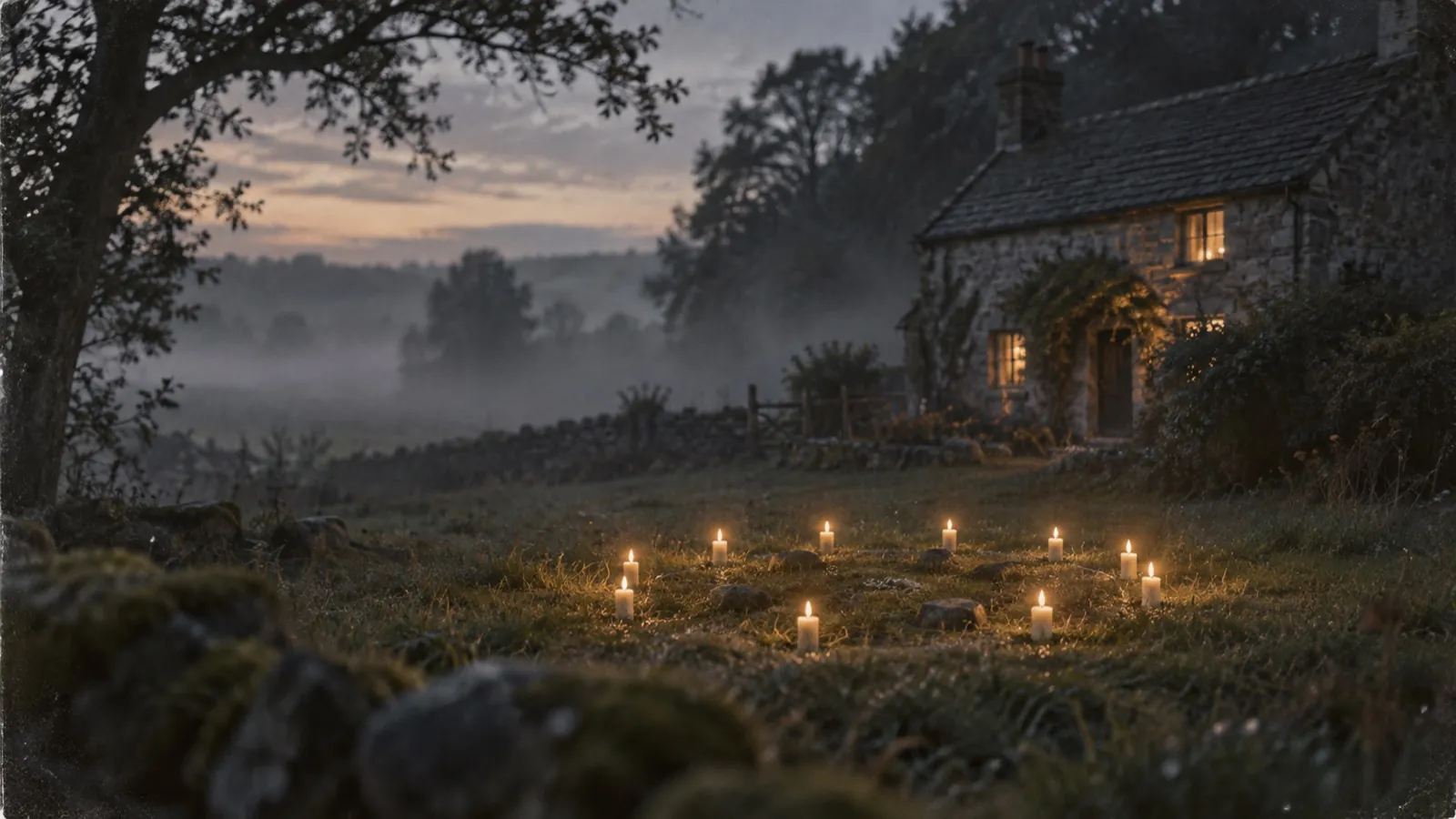
Many Southern porch ceilings are painted pale blue — 'haint blue' — to keep restless spirits (haints) away, and some say to fool wasps into thinking it's sky. The custom has roots in Gullah Geechee tradition.
Hang a horseshoe with the ends up to hold luck in. Some families hang it ends down so luck pours onto everyone who comes through the door.
Lay a broom across the threshold at night to keep harm out — nothing unwelcome can step over it. Never sweep after dark or you'll sweep your luck out.
A candle or lamp in the window welcomes travellers home and guides loved ones back safely. Use a battery candle if you leave it unattended.
Water witches walk a field holding a forked peach or willow stick, which dips down over hidden water. Many rural wells were dug this way. Try it for yourself — and note that a professional survey is the reliable way to site a well.
When someone passed away, mirrors in the house were covered and clocks stopped, so the spirit wouldn't get lost. Many families still observe this as a sign of respect.
Eat black-eyed peas for luck, greens for money and cornbread for gold on New Year's Day. Don't carry anything out of the house before something's been carried in.
Stitch a small blessing, name or date into a quilt or piece of mending. Quilts were family records and protective heirlooms — the love is in the stitches.
Cold iron
The old European belief that fairies, witches and wandering spirits can't abide cold iron crossed the ocean and settled deep into mountain and farm life.
Iron was the metal of the blacksmith and the farm — strong, man-made and forged in fire. Folk belief across Britain, Ireland and Germany held that spirits and the fair folk were weakened or turned away by it, and settlers brought that belief to the hills.
Drive an iron nail into the doorframe above the door, or at the threshold, so no haint or ill-wisher can cross. Old square-cut nails are the traditional choice.
A horseshoe nail bent into a ring and worn or carried was a mountain protection charm. Keep one in your pocket or tie one to a key ring.
An axe placed under the bed of a woman in labour was said to 'cut the pain'. A knife under the mattress kept away nightmares and night-riding spirits. Always keep blades sheathed and out of reach of children.
Scissors hung open over a cradle, or laid open under a pillow, formed a cross of iron to protect a sleeping baby or restless sleeper. Hang them securely, well out of a child's reach.
When the butter wouldn't come, folks said a witch was holding it back. A horseshoe heated in the fire and dropped into the churn was said to break the spell.
The iron skillet was the heart of the country kitchen and passed down through generations. Hang it by the stove or door as a hearth guardian, and cook family recipes in it to keep the blessing going.
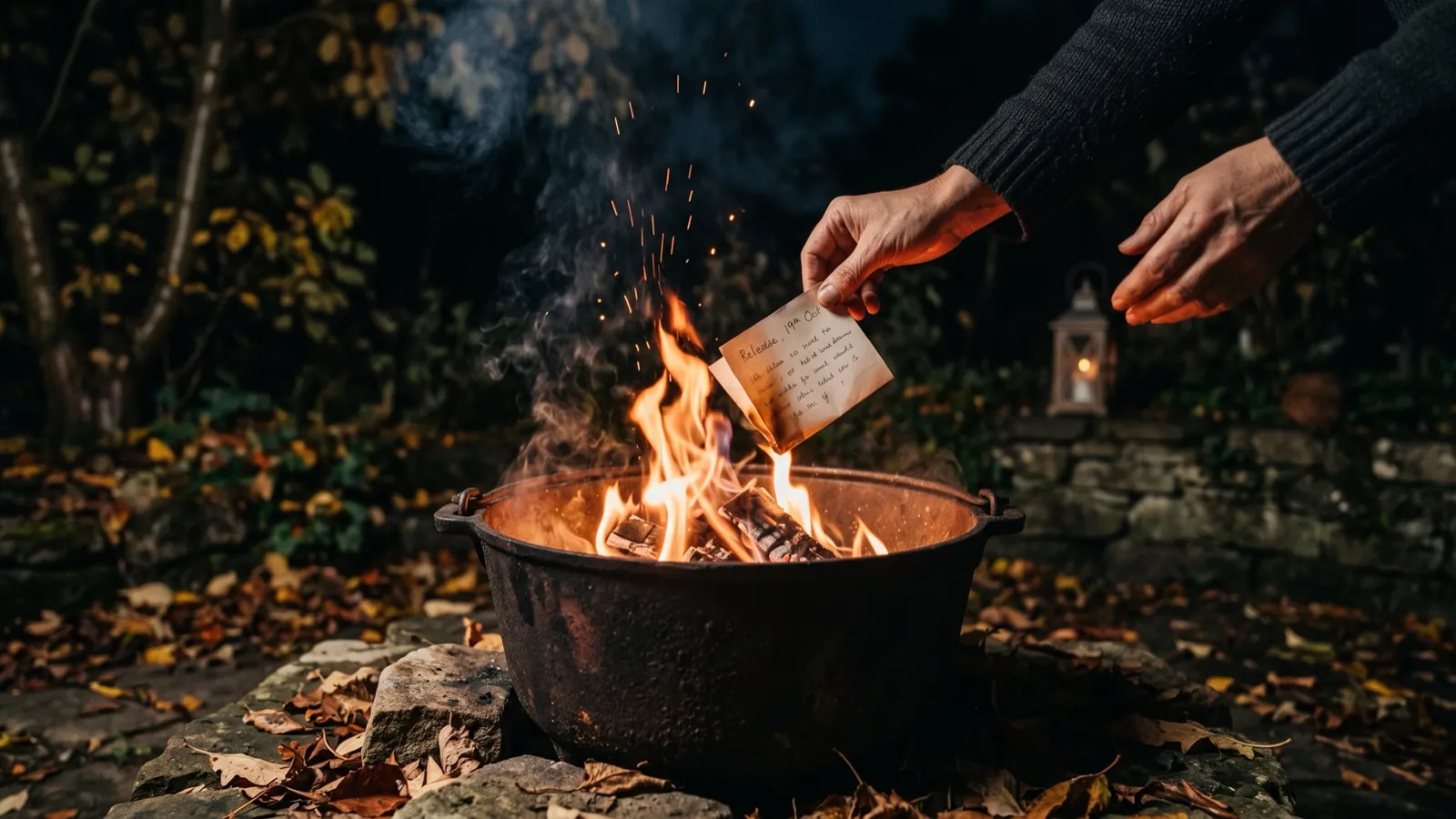
Burn a written worry or ill wish in an old iron pot or cauldron outdoors, well away from anything that can catch. The iron holds the fire; the smoke carries the trouble away.
From the farmhouse kitchen
Foodways and comfort traditions. Historical remedies are shared as culture, not medical advice.
Heat a greased cast-iron skillet in a hot oven. Stir together cornmeal, buttermilk, an egg, a little flour, salt and baking soda, pour it into the hot skillet and bake until golden. Stir clockwise to draw in blessings.
Apple butter was cooked outdoors in big copper kettles, with neighbours taking turns stirring all day. Make a small batch on the stove and share it — the gathering is the magic.
Brew strong tea, sweeten while hot, add a sprig of mint, and pour a glass for every guest. Hospitality is one of the strongest protections a home can have.
Walk the rows with a bucket of water at planting time and say a simple blessing or a favourite verse over the seeds.
Some families kept secret words said to 'draw out' the fire from a burn, passed only from man to woman and woman to man. Keep the tradition as heritage — and always cool a burn under running water and get medical help for serious burns.
Granny women knew when a case was beyond them. Burns, deep cuts, fevers and breathing trouble need a doctor, not a charm. Let the charm be the comfort, not the cure.