
How to Keep Samhain: A Gentle Guide for Beginners
Your first witches’ New Year, one candle at a time.
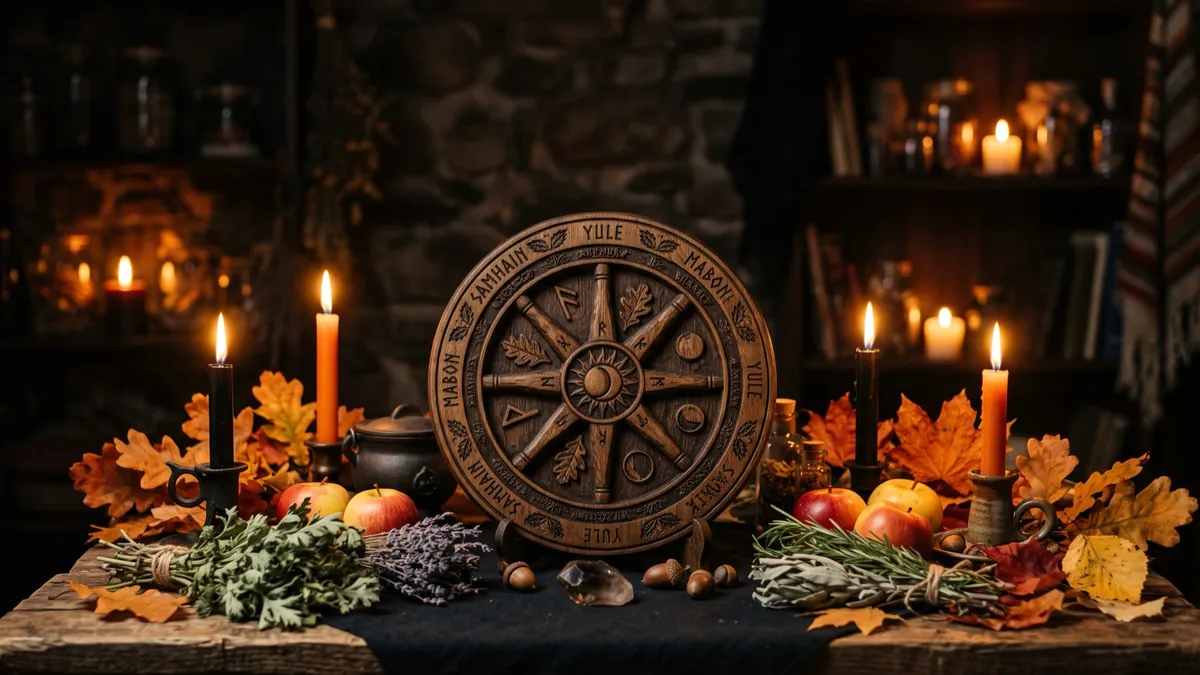
You don't need a coven, a Book of Shadows, or a cupboard full of tools to keep Samhain. You need an evening, a candle, and a willingness to remember.
Samhain (pronounced SOW-in) falls on the night of October 31st. It marks the end of the harvest and the turn into the dark half of the year. For many witches it's the most important night on the Wheel, the witches' New Year, when we honor the dead, let go of what the old year took, and rest on the threshold before something new begins. (Want the full story? Read our history of Samhain.)
This guide walks you through a simple Samhain evening from sunset to bedtime. Take all of it, or just one piece. There is no wrong way to begin.
Before You Begin
You don't have to be Wiccan. Samhain is kept by Wiccans, eclectic witches, Druids, Celtic Reconstructionists, and plenty of people who simply feel pulled toward the old ways. This guide shares common practices and doesn't speak for any one tradition.
You can keep it quietly. If you live with people who don't share your practice, almost everything here can be done in a single room, or even on a windowsill, and it can look like nothing more than a thoughtful evening.
Grief is welcome here. Samhain can bring up real loss. Go at your own pace. If a recent death feels too raw, it's fine to light one candle and leave it at that. Remembering gently is still remembering.
Fire safety comes first. Never leave a flame unattended. Keep candles on heat-proof dishes, away from curtains, pets, and dried herbs. LED candles are a perfectly good substitute in apartments, dorms, or homes with children.
What You'll Need
Everything on this list is optional, and most of it is already in your kitchen:
- One or more candles (white, black, or orange all work)
- Photos or keepsakes of loved ones who have died
- A small plate of food and a cup of something to drink
- A broom
- Paper, a pen, and a fireproof bowl or cauldron
- An apple, and a handful of hazelnuts or other nuts
- A tarot deck or oracle cards, if you have them
- Rosemary, a traditional herb "for remembrance"
A Samhain Evening, Step by Step
1. Sweep Out the Old Year (late afternoon)
Before the sun sets, give your home a clean start. In Scottish tradition this is called saining, and at New Year homes were blessed and cleansed so the year could begin fresh.
- Open a window or door, even just for a few minutes.
- Sweep from the back of the house toward the front door, then sweep the dust out over the threshold.
- As you sweep, say something simple:
"Out goes the old year's dust and trouble. This house is clean, and ready for what comes."
If you'd like, carry a smoldering sprig of rosemary or juniper through each room, or sprinkle a pinch of salt across the front doorstep. Then close the window. The house is ready.
2. Build Your Ancestor Altar (around sunset)
This is the heart of Samhain. Choose a small table, a shelf, or a corner of your dresser. Cover it with a dark cloth if you have one.
Then add:
- Photographs of people you have lost, or their names written on cards.
- Something that belonged to them, such as a ring, a recipe card, a pair of glasses, or a letter.
- Their favorite things: a candy bar, a cup of their coffee, a small glass of the drink they loved.
- Seasonal touches: apples, a pomegranate, autumn leaves, a small pumpkin, rosemary.
- A candle at the center.
Who counts as an ancestor? Anyone you want to honor. That includes grandparents and great-grandparents, but also friends, mentors, beloved pets, and people who shaped you from a distance, like a writer, a teacher, or a musician. Many witches also honor the "ancestors of spirit": the healers, cunning folk, and people accused of witchcraft in centuries past.
You don't have to honor anyone who harmed you. Being related to someone doesn't earn them a place on your altar. You can simply light a candle "for the ancestors who loved me well," or for the ones whose names are lost.
When everything is in place, light the candle and say their names out loud, one by one. If you know a story about someone, tell it. That's the whole ritual, and it's enough.
"On this night when the veil is thin, I light this flame for those I love. You are remembered. You are welcome here."
3. Set a Candle in the Window
Old folk custom says the dead come home on Samhain night. A light in the window shows them the way.
Place a candle (real or LED) on a windowsill facing the street or garden. It's one of the simplest and most beautiful Samhain practices, and neighbors will just see a cozy autumn window.
4. Share a Dumb Supper (dinner)
The dumb supper ("dumb" in the old sense of silent) is a meal eaten without speaking, with a place set for the dead. It's a modern custom built on older folk ideas, and it's powerful when you're alone and just as powerful with family.
How to do it:
- Set the table as usual, plus one extra place at the head or the end. Some people cover that chair with a black or white cloth.
- Serve everyone, including the empty place. Give it a little of each dish, especially anything a loved one enjoyed. Traditional choices include colcannon, root vegetables, apples, and dark bread (recipes are on our Samhain page).
- Eat in silence. Let the quiet do its work. Think about the people you're remembering, or simply listen.
- When everyone has finished, sit a moment longer. Then one person breaks the silence, perhaps with "Thank you for sitting with us."
- Afterward, carry the spirit plate outside and leave it for the land (see the next step).
With children or chatty families: try a "quiet supper" for just the first five minutes, or let everyone share one memory before eating instead.
5. Leave an Offering for the Good Neighbors
In Irish and Scottish folklore, Samhain was the night the fairy folk, the Aos Sí or "Good Neighbors," rode out from their mounds. Wise households kept on good terms with them by leaving food out on this night.
Put a little bread, milk, an apple, or the plate from your dumb supper outside by the door or at the foot of a tree:
"For the spirits of this land, with thanks. Be good neighbors to this house, as we will be to you."
Be kind to local wildlife: skip chocolate, onions, and anything salty or spicy, and clear away leftovers in the morning.
6. Let the Old Year Go (evening)
Samhain is an ending as much as a beginning. It's the perfect night to set down whatever you don't want to carry into the new year.
- Sit by your altar candle with a slip of paper.
- Write down what you're releasing. It might be a habit, a fear, a grudge, a grief you're ready to hold more lightly, or a version of yourself you've outgrown.
- Fold the paper away from you.
- Light it from your candle and drop it into a fireproof bowl or cauldron (outdoors if you can). Watch it burn.
"What is finished, I release. What is done, I let go. I carry forward only what helps me grow."
No fire? Tear the paper into small pieces and bury it in the garden, or drop it into running water from the tap as you speak the words.
7. Ask What the New Year Holds (late evening)
With the veil thin, Samhain has always been a night for divination. Try one of these, or both:
The old ways (for fun, or for real):
- The apple peel. Peel an apple in one long unbroken strip. Toss it over your left shoulder. The shape it lands in is said to show the first initial of a future love.
- Nuts on the hearth. Name two nuts, one for yourself and one for another person or a choice you're weighing, and set them near the fire or on a hot pan. If they burn quietly together, all is well. If one pops and jumps away, expect a parting. The game was so popular that in northern England Halloween was once called Nutcrack Night, and Robert Burns describes it in his 1785 poem "Halloween."
A Samhain tarot spread (three cards):
- What the old year taught me
- What I'm leaving behind
- What is waiting for me in the new year
No tarot deck? Try our free Daily Draw, or simply gaze into a bowl of dark water by candlelight and notice what comes to mind.
8. Close the Night
Before bed:
- Thank your ancestors: "Thank you for visiting. Go in peace, and come again."
- Put out every candle, except any LED in the window, which can keep the light on all night.
- Write a few lines in a journal. You'll love reading them next Samhain.
Journal prompts:
- Who did I remember tonight, and what did they teach me?
- What am I proudest of from this past year?
- What did I let go of, and how do I feel now?
- What seed do I want to plant for the year ahead?
Short on Time? The Ten-Minute Samhain
If life is busy, this is still a complete Samhain:
- Light one candle next to a photo of someone you miss.
- Say their name out loud and share one memory, even just to yourself.
- Write one thing you're letting go of, then tear it up.
- Draw one card for the new year.
- Say thank you, and put out the flame.
Keeping Samhain with Kids
Samhain and Halloween share the same roots, so the two blend easily:
- Carve a lantern together, and tell children about the old Irish and Scottish turnip lanterns.
- Bake together: soul cakes (the treats English children once sang for door to door, the ancestors of trick-or-treating), colcannon with a wrapped charm hidden inside, or a simple apple crumble.
- Make a family memory table with photos of grandparents and a story about each one.
- Play the old games: apple bobbing, snap-apple (catching an apple hung on a string with your teeth), and hazelnut fortune-telling.
- Save the heavier work, like deep grief rituals, release burnings, or scrying, for after bedtime.
Frequently Asked Questions
Is Samhain the same as Halloween? They share the same roots. Halloween grew out of Samhain folk customs and the Christian feast of All Hallows. Many witches enjoy both: costumes and candy with friends, then a quiet Samhain ritual at home.
Do I have to celebrate on October 31st exactly? No. Traditionally Samhain runs from sunset on October 31st to sunset on November 1st, and many witches keep it any evening that week. Some Celtic Reconstructionists wait for the first frost. In the Southern Hemisphere, Samhain is kept around April 30th–May 1st, when the nights there are growing long.
Is it dangerous to contact the dead? Nothing in this guide calls on spirits. It's about remembering, not summoning. If an activity ever feels uncomfortable, stop, put out the candle, and turn on the lights. Your own comfort is always your best guide.
What if I don't feel anything? That's completely normal, especially at first. Samhain isn't a test. Lighting a candle and saying a name out loud is a real act of love, whether or not you feel something shift.
Can I keep Samhain if I'm not sure I believe in an afterlife? Yes. Remembering the people who came before you, marking the season, and letting go of the old year are meaningful whatever you believe.
Blessed Samhain. May the ones you love be remembered, and may the dark be kind to you.
Samhain: History & Correspondences
The old Irish stories, the fires of Tlachtga, the sister festivals, and how Samhain became the witches’ New Year.
Halloween & Samhain Spells
An ancestor remembrance, a threshold protection, and a thin-veil divination working.
Samhain vs. Halloween: What’s the Actual Difference?
They share a date and a lot of history, but they aren’t the same holiday.