
Witch Bells: What They Are and How to Use Them
A short guide to the little strings of bells that hang on the door: where the habit comes from, how to choose a set, and a simple way to charge one for your home.
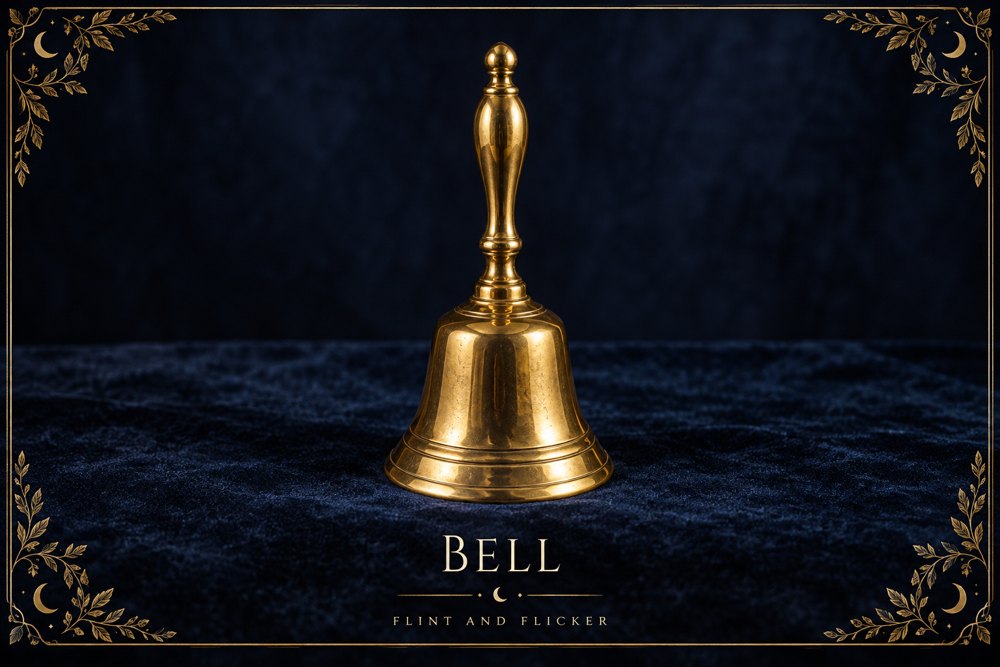
Witch bells are strings of small bells, usually brass, hung from a door handle or a hook beside the frame. The idea behind them is simple and very old: a doorway is a threshold, and a threshold is the place where you decide what comes in. A bell gives that decision a sound.
Where the tradition comes from
People have used bells to mark boundaries and clear the air for a very long time. Church bells were rung against storms, small bells hung on livestock and harnesses, and bells were sewn into festival clothing across Europe and Asia. The belief that a clear, ringing note scatters stagnant or unwelcome energy turns up in many folk traditions.
Witch bells as a named craft, a cord of bells hanging on the door, are a modern form of that older habit, popularised through the contemporary witchcraft revival. That makes them a living folk practice rather than a single ancient rite, and there is nothing wrong with saying so. A tradition does not have to be ancient to be meaningful.
What they are for
Most people hang witch bells for three overlapping reasons. The first is protection: the bells stand guard at the threshold and are meant to turn away harm and ill will. The second is clearing: every time the door opens and closes the bells ring, and that sound is treated as a small, constant cleansing of the home. The third is entirely practical, and no less useful for it: you hear who is coming and going.
A bell will not do your protecting for you. It gives you a daily, audible reminder of your own intention, which is most of what any ritual tool does.
Choosing a set
There is no wrong set, but a few things are worth looking at before you buy.
- Metal. Brass and bronze give a warm, lasting ring. Iron has a long reputation as a protective metal in folk belief, though iron bells sound duller.
- Number. Odd numbers, three, five, seven or nine, are traditional in folk magic. Choose the number that means something to you.
- Cord. Natural jute, hemp or leather looks right and ages well. Make sure it is long enough for the bells to hang free without knocking against the door.
- Charms. Many sets include a pentacle, a moon, an evil-eye bead or a crystal. Pick the symbols that fit your own practice.
- Sound. If you can, listen before you commit. You will hear it every day, so choose a note you enjoy.
Where to hang them
The most common place is the inside handle of the front door, so the bells swing when the door opens. A hook on the door frame or the back of the door works just as well. Back doors, bedroom doors and window latches are also used. Keep them indoors where you can: brass tarnishes outside, and a sheltered spot keeps the cord from weathering.
A simple way to charge them
- Cleanse. Wipe the bells with a soft cloth, then pass them through incense or herb smoke. Avoid burying brass in salt, which can corrode it.
- Ring each bell once, slowly, and let the sound fade completely before the next.
- Say your purpose aloud, in your own words. Something plain works best: “This door welcomes friends and turns away harm.”
- Hang them, then open and close the door three times so they ring.
- Refresh them at each new moon: ring the bells, repeat your intention, and wipe away any dust.
Care
Brass darkens with time, and many people like the patina. If you prefer it bright, a little brass polish will do. Check the knots and cord now and then, and replace the cord if it frays. If a bell cracks or loses its voice, thank it and retire it, and hang a new one.
Keeping expectations honest
Witch bells belong alongside good locks, not instead of them. What they add is a pleasant sound, a daily moment of intention, and a small ritual at the edge of your home. For most people that is plenty.
Building a Simple Spell Kit
A small, honest list of what you actually need to start doing spellwork — and what you can skip entirely, especially on a tight budget.
A Short History of the Pentacle Symbol
The five-pointed star has been a protective, mathematical, and religious symbol for well over two thousand years — Wicca is one of its more recent chapters, not its origin.
Moon Water & Moon Rituals
A practical guide to the most common lunar practice — what moon water actually is, how to make it safely, and a few rituals to pair with each phase beyond just water.