
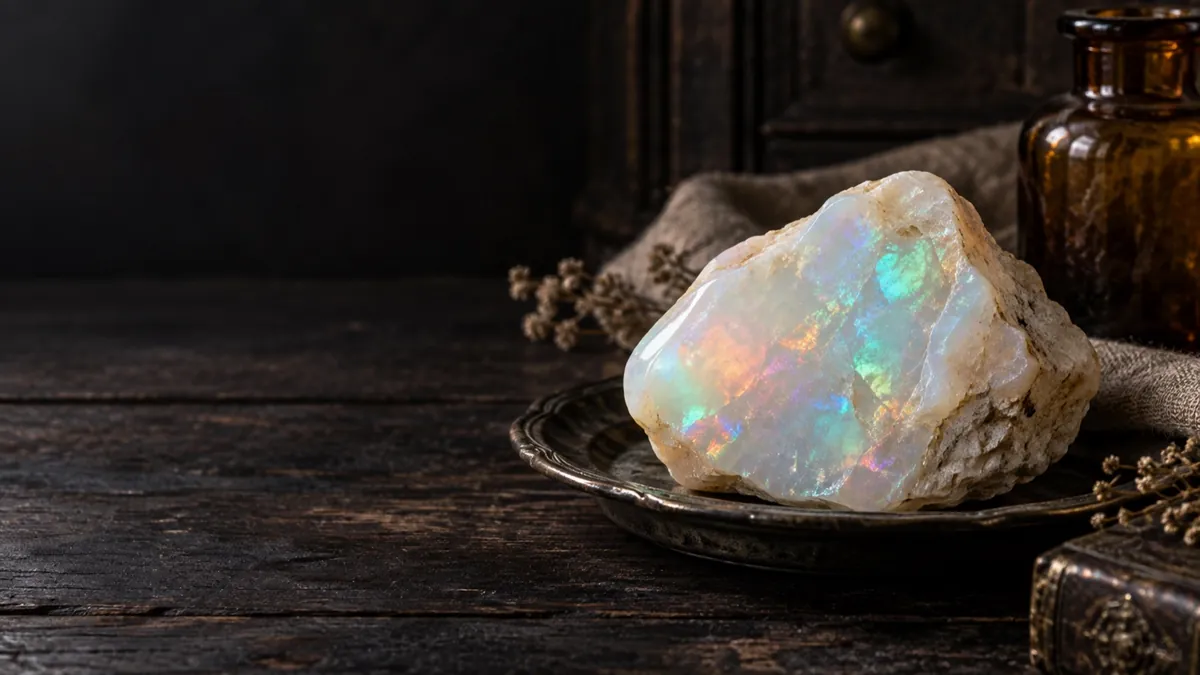
About Opal
Opal flashes with shifting colour. It is used for creativity, emotional expression and love — though some folklore calls it unlucky, so correspondences vary.
Considered changeable by some, lucky by others — correspondences aren't universal across sources.
History & folklore
The Romans prized opal above all gems. Sir Walter Scott's 1829 novel 'Anne of Geierstein' gave opal an unlucky reputation, but Queen Victoria loved it and helped restore its image. In Aboriginal Australian legend, the creator came down to earth on a rainbow, and where his feet touched the ground, the stones turned into opals.
Correspondences
- Traditional uses
- Creativity, emotional expression, love
- Colour
- Play of rainbow colour
- Hardness
- 5.5–6.5 (Mohs)
- Element
- Water
- Chakra
- All
- Best day
- Monday or Friday
- Moon phase
- Waxing moon — for drawing things toward you
- Intentions
- Creativity, Love
Ways to work with it
- Wear it for creative inspiration.
- Hold it when expressing your feelings.
- Place it on your altar for love work.
Where it comes from
Around 90% of the world's precious opal comes from Australia; Ethiopian opal is also popular. Opal 'doublets' and 'triplets' are thin slices of opal glued to backing.
Opal contains water and can crack if it gets too hot or dry. Don't soak opal doublets or triplets.
Spells to try
Pairs well with
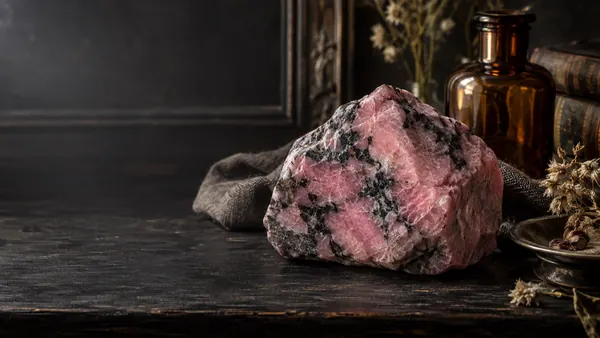 RhodoniteEmotional healing, forgiveness, love
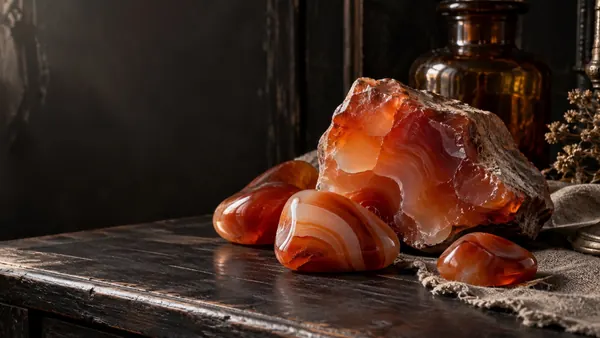 CarnelianCourage, creativity, motivation
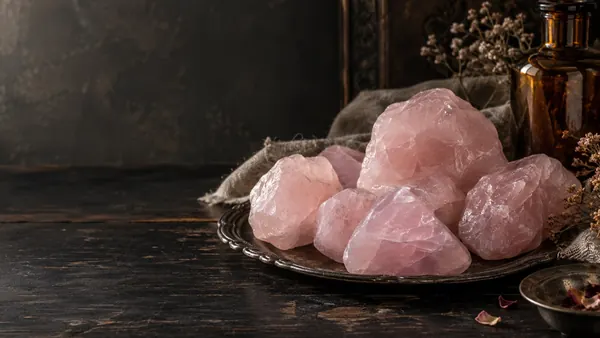 Rose QuartzLove, self-love, compassion
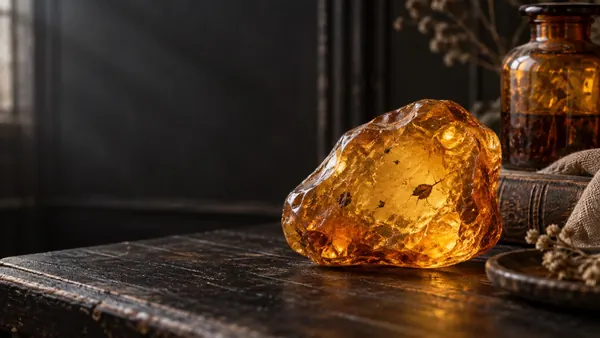 AmberProtection, healing, luck
Correspondences are traditional associations gathered from folk practice and modern craft books. They vary between sources, and they are not medical advice. Read our editorial approach.