What it is for
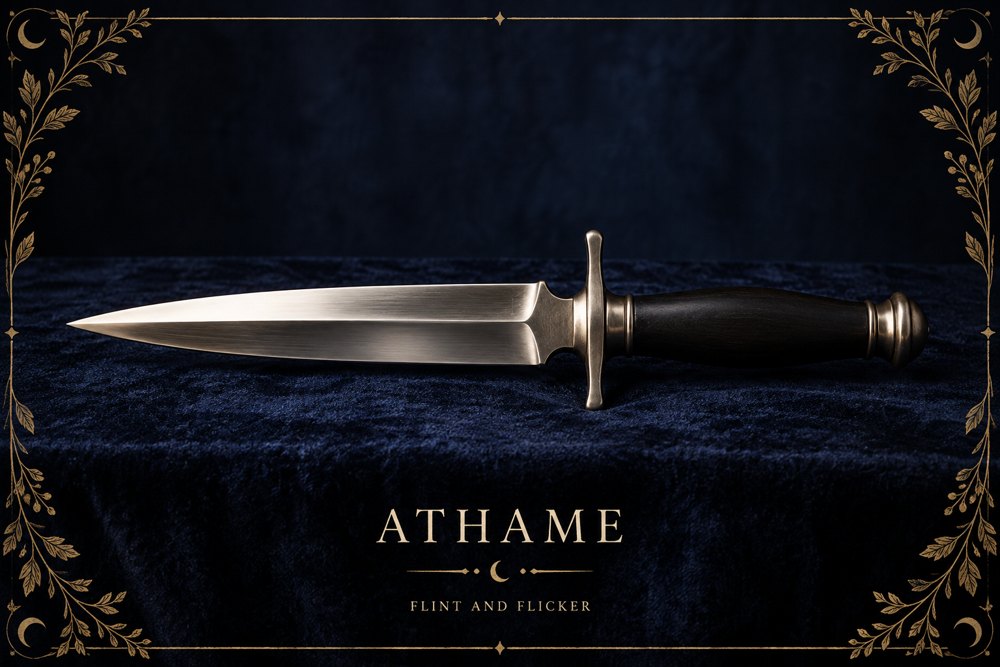
In many Wiccan and related practices, an athame is a ritual knife used symbolically to direct intention, mark a circle, or indicate a boundary. It is not needed for this site’s beginner rituals.
Meaning depends on context
Associations with air or fire vary by tradition. Handle color, blade form, and consecration customs also vary. Follow the practice you actually study instead of treating one online diagram as a universal rule.
Choosing one
A comfortable, secure handle matters more than ornate decoration. A blunt symbolic object may suit a home practice better than a sharpened blade. If you do not want a knife in the house, do not buy one for spiritual completeness.
Your finger, an empty hand, or a wand can mark the same chosen gesture.
A simple first practice
- Set a clear intention, such as setting aside ten minutes without interruption.
- With a finger or safe symbolic tool, indicate the space around your working area without swinging or pointing at anyone.
- Say what the boundary means in practical terms: “During this time I put other tasks aside.”
- At the end, lower your hand or put the tool away and consciously return to ordinary activity.
Care and practical considerations
Store any blade securely, with an appropriate sheath and out of reach of children. Keep gestures away from bodies. Do not use a display knife for food preparation.
A common question
Does it need to be sharp? No. The exercise here uses symbolism, not cutting. Some traditions have specific requirements; that is a reason to learn their context, not to assume every beginner needs a weapon.
Make the meaning your own
After using the tool, write what it helped you notice. Was the gesture useful? Would a simpler object work just as well? You can keep a tool because you enjoy its beauty, but you do not need to turn that preference into a spiritual requirement.
The practice above is an original modern exercise. For a tradition’s specific ritual instructions, learn from sources and teachers who name that tradition clearly. Read our editorial approach.
Return to all eight ritual tools · Find a printable practice sheet
Updated September 16, 2026 · Original practice suggestions by Flint & Flicker. Traditions differ; adapt to your circumstances.
Continue exploring the library →