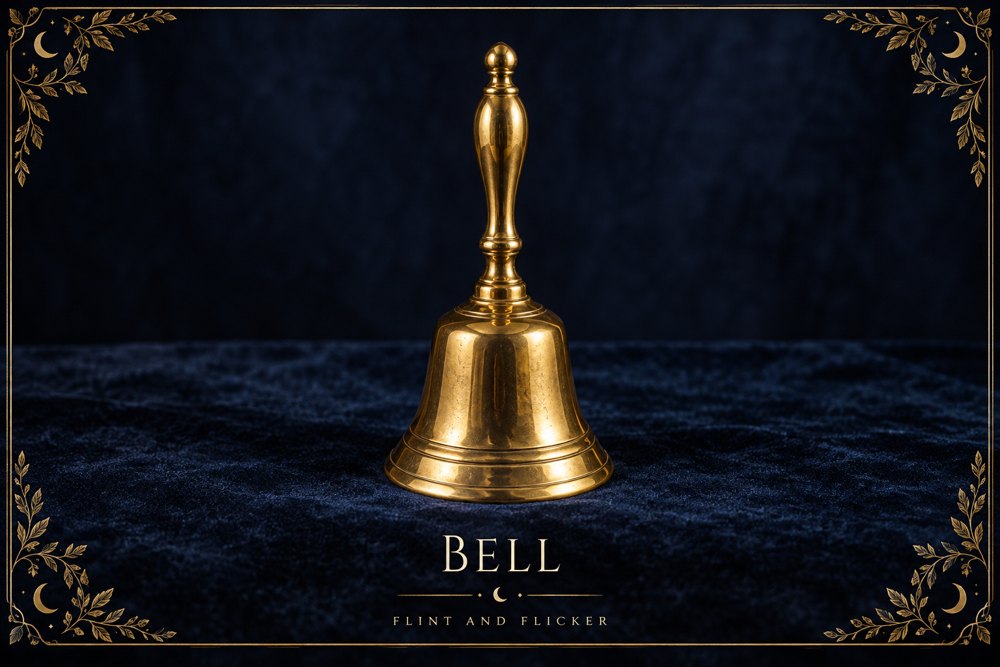
What it is for
A bell can signal the opening and closing of a ritual, draw attention back to the present, or mark a transition between activities.
Meaning depends on context
Sound has many religious and ceremonial uses across cultures. A modern witchcraft bell practice should not be described as the origin or universal meaning of all sacred bells.
Choosing one
Choose a tone and volume that are comfortable for you and anyone sharing the space. A beautiful object is not useful if its sound causes distress.
A quiet phone chime, a gentle tap on a cup, or a silent hand gesture can mark the same transition.
A simple first practice
- Tell anyone nearby before making an unexpected sound.
- Ring once, softly, and listen until the sound fades.
- Begin the chosen practice without treating the tone as something you must interpret.
- At the end, ring once again or make your chosen silent gesture, then put the object away.
Care and practical considerations
Avoid ringing close to ears. Consider sound sensitivities, sleeping people, pets, and shared walls. Silence is a valid adaptation.
A common question
Must I ring a certain number of times? No fixed number is required for this exercise. Repetition may have a traditional meaning in a particular system, or you may choose a simple personal cue.
Make the meaning your own
After using the tool, write what it helped you notice. Was the gesture useful? Would a simpler object work just as well? You can keep a tool because you enjoy its beauty, but you do not need to turn that preference into a spiritual requirement.
The practice above is an original modern exercise. For a tradition’s specific ritual instructions, learn from sources and teachers who name that tradition clearly. Read our editorial approach.
Return to all eight ritual tools · Find a printable practice sheet
Updated September 16, 2026 · Original practice suggestions by Flint & Flicker. Traditions differ; adapt to your circumstances.
Continue exploring the library →