What it is for
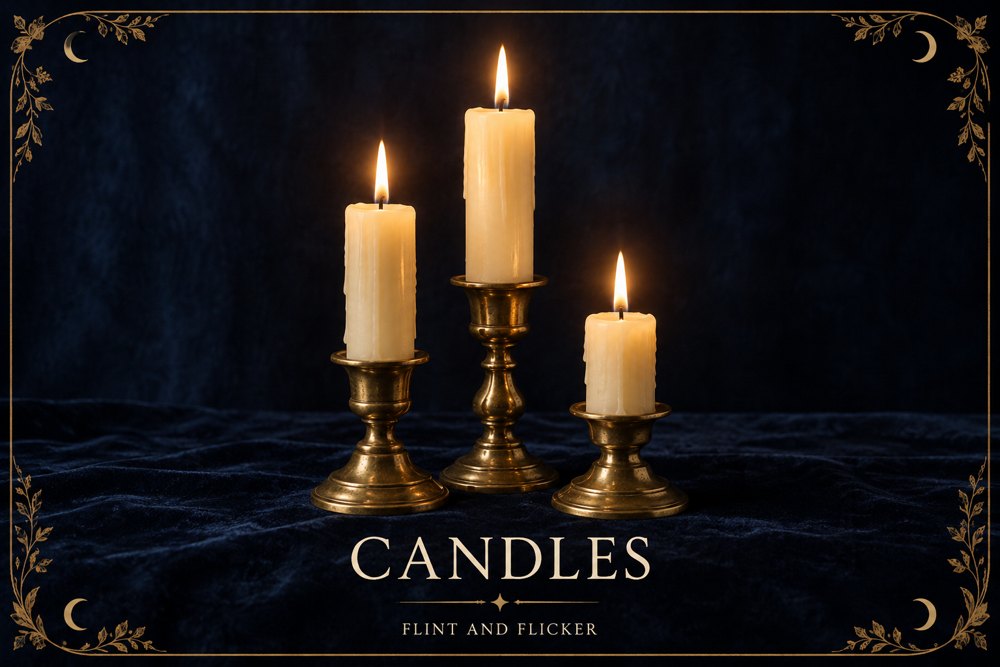
A candle can mark time, create a focal point, or symbolize a quality you are reflecting on. It is one of the easiest ritual objects to substitute: an LED candle or lamp provides a clear visual cue too.
Meaning depends on context
Color correspondences differ among practitioners and books. Treat colors as a vocabulary you choose and explain, not a rule that makes a ritual fail when you own the wrong candle.
Choosing one
Choose a stable holder and a candle suited to it. Unscented options can be more comfortable in shared spaces. Burning herbs, glitter, oils, and decorations on a candle is unnecessary for a focused practice.
A battery candle, a small lamp, or a drawn flame works for the exercises on this site.
A simple first practice
- Clear the area and place the candle on a stable, heat-resistant surface away from loose cloth, hair, and other flammable objects.
- Name one intention and light the candle or switch on the LED.
- Spend a few minutes writing or sitting with the intention. Blink naturally rather than forcing a fixed stare.
- Extinguish or switch off the light before leaving, then take one action connected to your intention.
Care and practical considerations
Stay with a burning candle. Follow the maker’s instructions and keep flame away from pets and children. Do not move hot wax or use water to extinguish a wax fire. If flame is unsuitable, choose an LED from the start.
A common question
Will an LED candle count? For the original reflective practices here, yes. The cue and meaning matter; an open flame is not a test of commitment.
Make the meaning your own
After using the tool, write what it helped you notice. Was the gesture useful? Would a simpler object work just as well? You can keep a tool because you enjoy its beauty, but you do not need to turn that preference into a spiritual requirement.
The practice above is an original modern exercise. For a tradition’s specific ritual instructions, learn from sources and teachers who name that tradition clearly. Read our editorial approach.
Return to all eight ritual tools · Find a printable practice sheet
Updated September 16, 2026 · Original practice suggestions by Flint & Flicker. Traditions differ; adapt to your circumstances.
Continue exploring the library →