What it is for
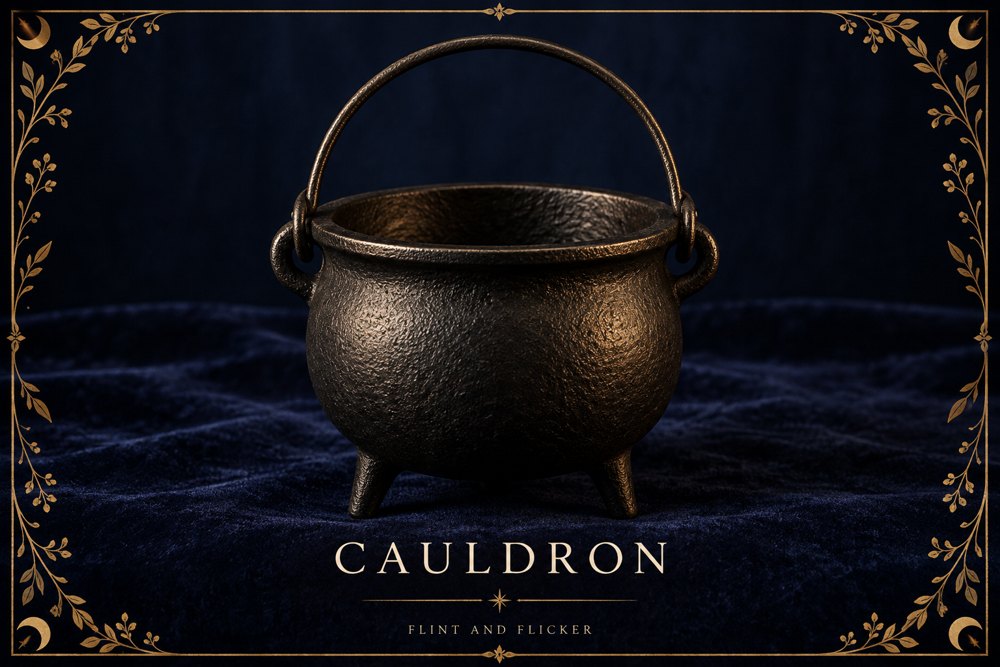
A cauldron is a vessel that can symbolize containment, transformation, or the gathering of ingredients. A decorative cauldron does not automatically tolerate heat, food, or burning material.
Meaning depends on context
Cauldrons appear in folklore and modern witchcraft with different stories attached. A personal transformation exercise is a modern use, not proof of a single continuous ritual method.
Choosing one
Decide what you actually need it to do. Display, food preparation, and containing heat require different materials. Keep a vessel used for wax or non-food substances separate from cookware.
For a fire-free release ritual, use an ordinary bowl and torn paper.
A simple first practice
- Write a manageable concern or expectation on a small piece of paper.
- Name what you can change about it and what is outside your control.
- Tear the paper and place it in the empty bowl. No burning is needed.
- Write one next action on a fresh page. Empty the bowl into appropriate waste or recycling when you close.
Care and practical considerations
Never assume small cast-iron-looking décor is safe for fire. Follow manufacturer guidance for heat use. Avoid burning materials indoors in an improvised container; smoke and heat are not necessary to make a symbolic release meaningful.
A common question
Is burning the paper more powerful? There is no established measure of ritual power here. Tearing, folding, or simply filing the paper can carry the meaning you choose.
Make the meaning your own
After using the tool, write what it helped you notice. Was the gesture useful? Would a simpler object work just as well? You can keep a tool because you enjoy its beauty, but you do not need to turn that preference into a spiritual requirement.
The practice above is an original modern exercise. For a tradition’s specific ritual instructions, learn from sources and teachers who name that tradition clearly. Read our editorial approach.
Return to all eight ritual tools · Find a printable practice sheet
Updated September 16, 2026 · Original practice suggestions by Flint & Flicker. Traditions differ; adapt to your circumstances.
Continue exploring the library →