
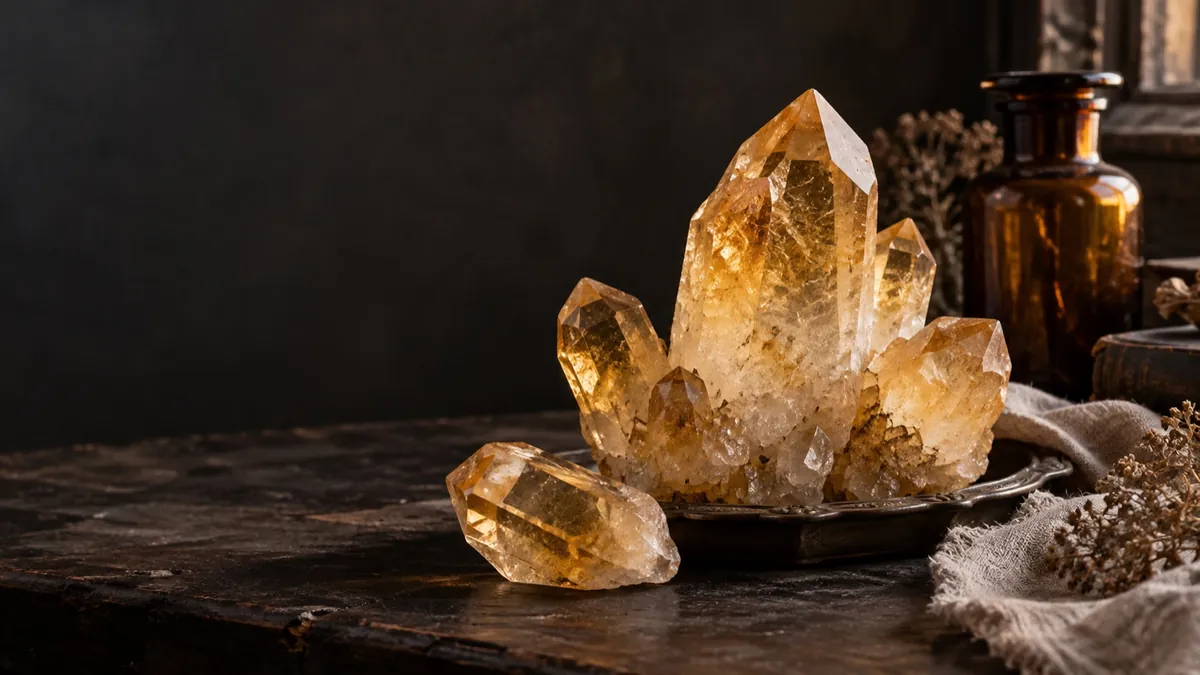
About Citrine
Citrine is the sunny stone of abundance, confidence and joy — sometimes called the 'merchant's stone'. It is said not to hold on to negative energy.
A "self-cleansing" stone in most traditions (rarely needs energetic clearing).
History & folklore
Citrine's name comes from the French citron, 'lemon'. It was worn as protection against snake venom and evil thoughts in the Middle Ages and was a favourite in Victorian and Art Deco jewellery. It became known as the 'merchant's stone' through the belief that it drew customers and money.
Correspondences
- Traditional uses
- Abundance, confidence, joy
- Colour
- Pale yellow to golden orange
- Hardness
- 7 (Mohs)
- Element
- Fire
- Chakra
- Solar plexus
- Best day
- Sunday or Tuesday
- Moon phase
- Waxing moon — for drawing things toward you
- Intentions
- Abundance, Confidence, Joy
Ways to work with it
- Keep citrine in your cash box, wallet or the wealth corner of your home.
- Carry it before a presentation or interview.
- Place it in a sunny room to lift the mood.
Where it comes from
Natural citrine is pale, smoky yellow and fairly rare. Most bright orange citrine clusters are heat-treated amethyst — you can often see a white base where they grew in the geode.
Most citrine sold is heat-treated amethyst — lovely, but worth knowing. Natural citrine fades in strong sunlight.
Spells to try
Pairs well with
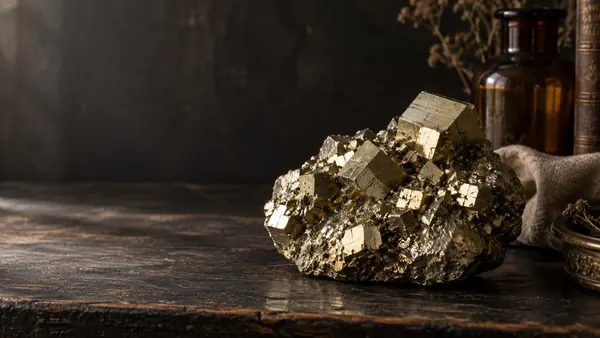 PyriteAbundance, confidence, protection
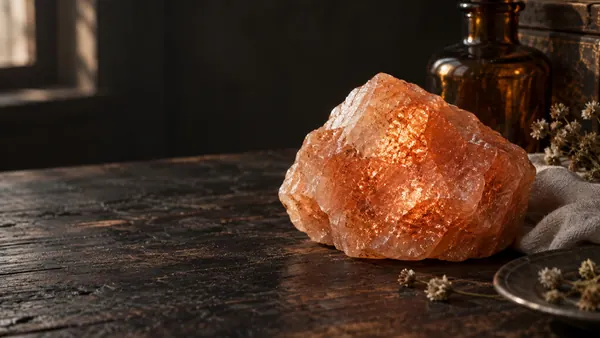 SunstoneJoy, leadership, vitality
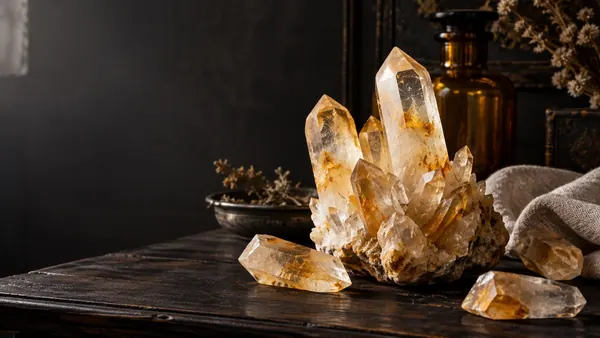 Golden Healer QuartzAbundance, personal power, warmth
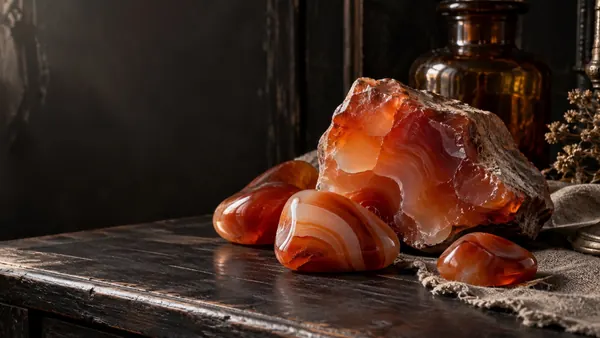 CarnelianCourage, creativity, motivation
Correspondences are traditional associations gathered from folk practice and modern craft books. They vary between sources, and they are not medical advice. Read our editorial approach.