
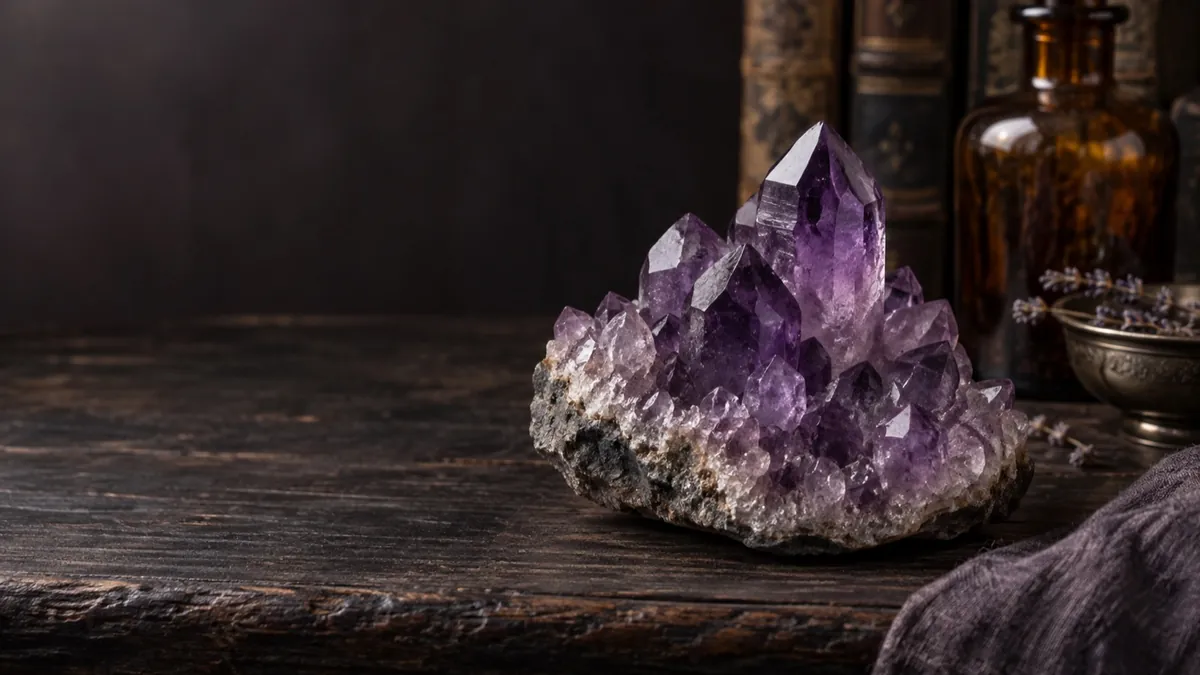
About Amethyst
Amethyst's name comes from the Greek for 'not drunk' — it was believed to keep the wearer clear-headed. It is used for calm, intuition, protection and sobriety.
Traditionally associated with clear-headedness and psychic work.
History & folklore
In a Greek myth, the maiden Amethystos was turned into white stone to escape Dionysus, who poured wine over her in regret and stained her purple. Bishops wore amethyst rings, and Catherine the Great loved it. It was the stone of sobriety and royalty for centuries.
Correspondences
- Traditional uses
- Intuition, calm, protection, sobriety
- Colour
- Pale lilac to deep purple
- Hardness
- 7 (Mohs)
- Element
- Air / Water
- Chakra
- Crown & third eye
- Best day
- Wednesday
- Moon phase
- Full moon — when intuition and divination are strongest
- Intentions
- Calm, Intuition, Protection
Ways to work with it
- Keep a piece by your bed for calm sleep and meaningful dreams.
- Hold it during meditation or before a tarot reading.
- Carry it when you want to keep a clear head.
Where it comes from
Most amethyst comes from Brazil and Uruguay, often from huge geodes. Natural colour sits unevenly in bands or zones; very even, bright purple may be glass or dyed.
Amethyst fades in strong sunlight — cleanse it by moonlight rather than sunlight.
Spells to try
Pairs well with
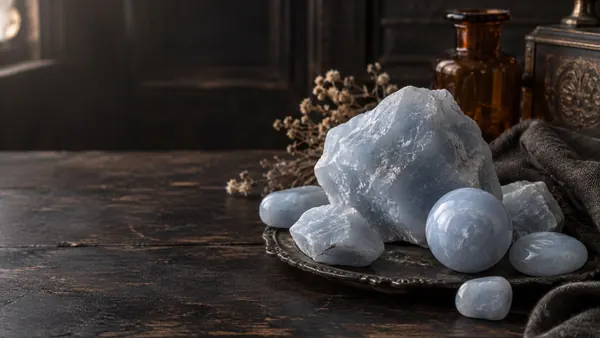 AngelitePeace, communication, protection
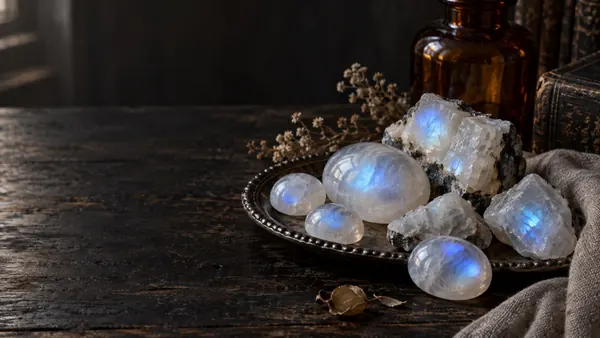 MoonstoneIntuition, new beginnings, feminine energy
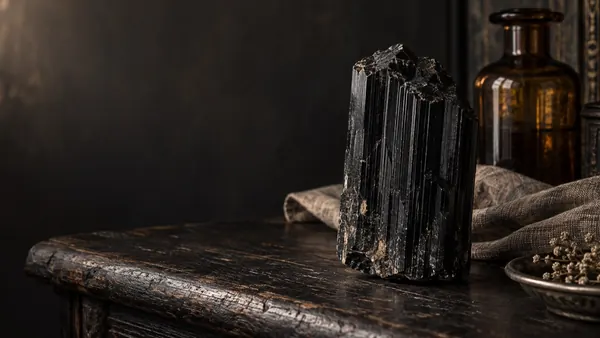 Black TourmalineProtection, grounding, shielding
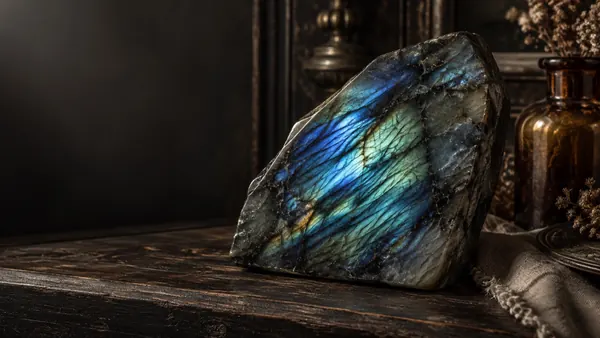 LabradoriteTransformation, intuition, magic
Correspondences are traditional associations gathered from folk practice and modern craft books. They vary between sources, and they are not medical advice. Read our editorial approach.