About Labradorite
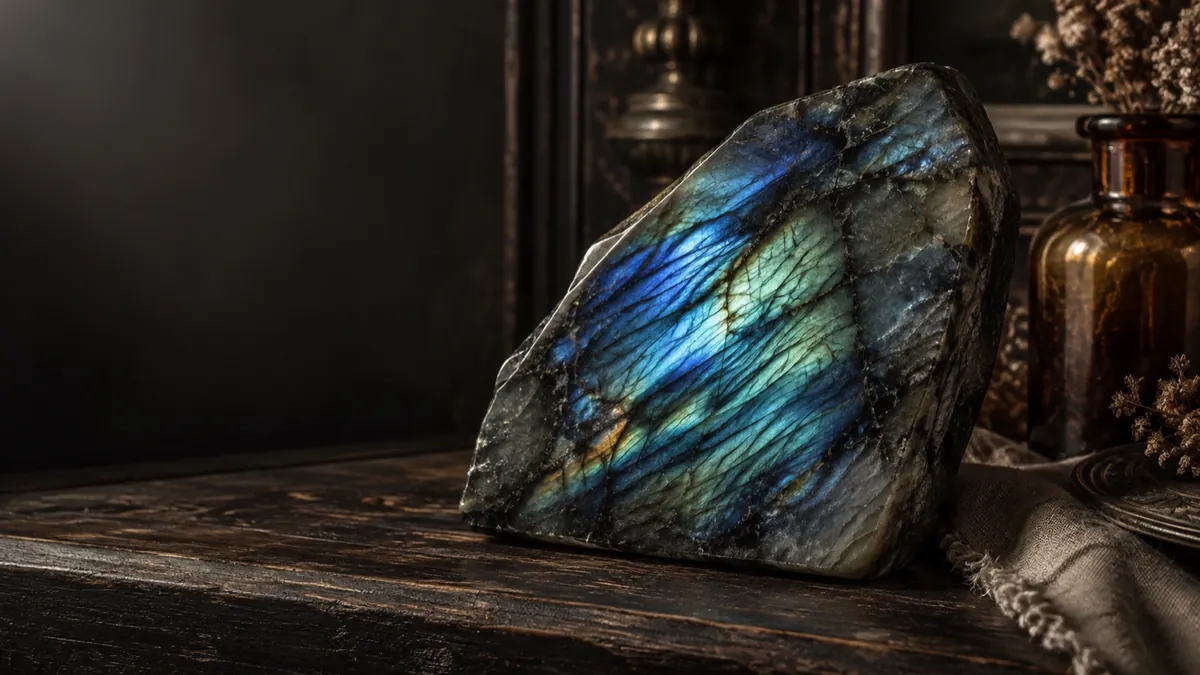
Labradorite's hidden flashes of colour appear only at the right angle — making it the stone of transformation, magic and in-between states.
Strongly associated with change and liminal/threshold states.
History & folklore
Labradorite was found in Labrador, Canada in 1770. Inuit legend says the Northern Lights were once trapped in the rocks along the coast, until a warrior freed most of them with his spear — the rest remain in labradorite.
Correspondences
- Traditional uses
- Transformation, intuition, magic
- Colour
- Grey with blue, green and gold flashes
- Hardness
- 6–6.5 (Mohs)
- Element
- Water
- Chakra
- Third eye
- Best day
- Monday or Friday
- Moon phase
- Full moon — when intuition and divination are strongest
- Intentions
- Transformation, Intuition
Ways to work with it
- Carry it through periods of change.
- Hold it during scrying or tarot to sharpen intuition.
- Wear it as a protective, magical stone.
Where it comes from
Labradorite comes from Madagascar, Finland (where it's called spectrolite) and Canada. The flashes of colour (labradorescence) appear only at certain angles.
Can chip if knocked. Avoid harsh cleaners.
Spells to try
Pairs well with
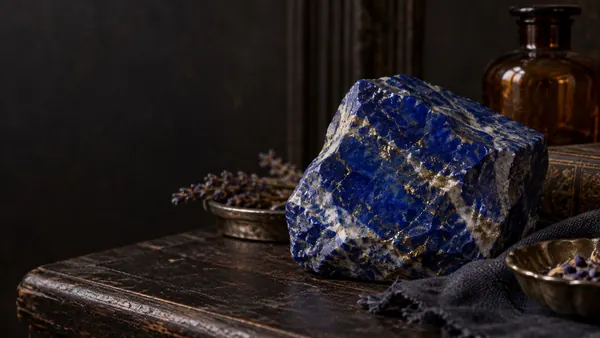 Lapis LazuliWisdom, truth, psychic ability
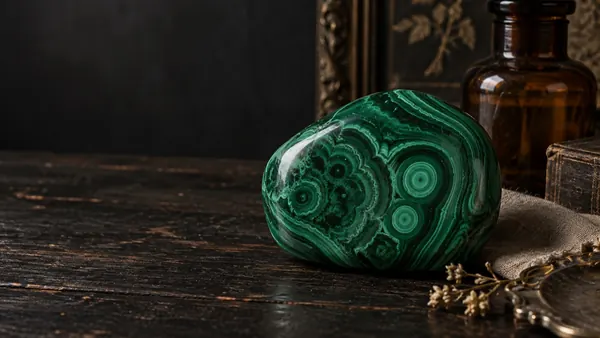 MalachiteTransformation, protection, prosperity
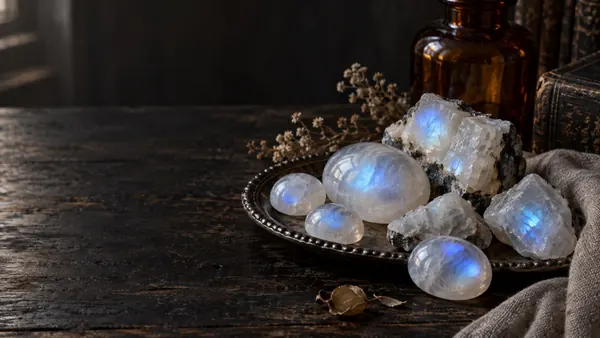 MoonstoneIntuition, new beginnings, feminine energy
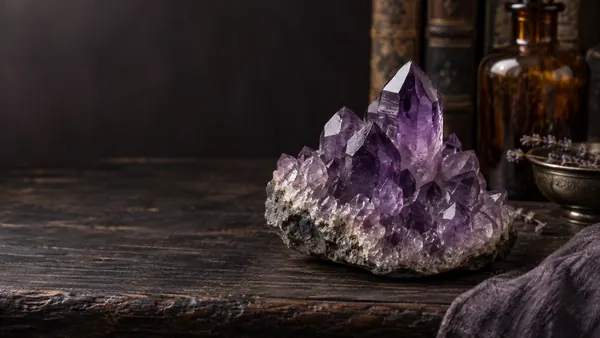 AmethystIntuition, calm, protection, sobriety
Correspondences are traditional associations gathered from folk practice and modern craft books. They vary between sources, and they are not medical advice. Read our editorial approach.